
Health & Fitness · iOS
Bend: Stretching & Flexibility
by Bowery Digital
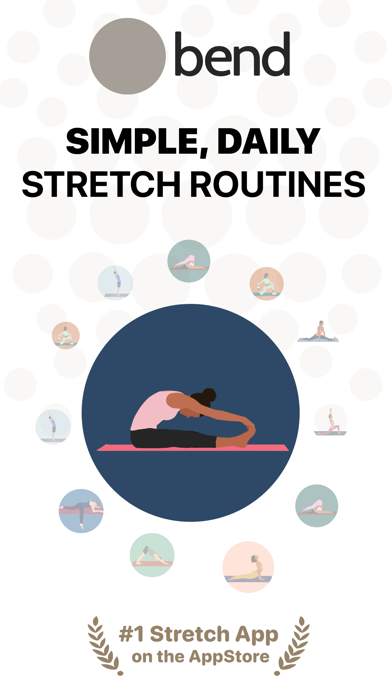


Launched in May 2020 and still actively updated as of July 2026, Bend from Bowery Digital has cultivated a remarkably loyal user base by doing one thing well. The app delivers hundreds of stretches and dozens of targeted routines covering common problem areas like the lower back, hips, neck, and shoulders. At 229 MB it is a meaningful install, but the depth of content justifies the footprint. Free to download, with a subscription model underneath.
Focused stretching routines with sustained user approval
Bend's defining quality is restraint. Rather than bolting on nutrition tracking, meditation modules, or general workout plans, every piece of content here serves a single purpose: improving flexibility and range of motion. Routines target the areas most people actually complain about, including the lower back, hips, neck, and shoulders, which gives the guidance a purposeful, clinical feel rather than a padded-out one. A rating of 4.77 stars across 171,000 submissions is a genuinely rare signal of sustained user satisfaction, suggesting the core experience delivers on its promise consistently rather than just at first launch.
Moderate size and recent updates suggest stability
Qualitative signals here are encouraging. The 229 MB install size is moderate for a content-rich fitness app, and version 7.6.3 was pushed on July 2, 2026, indicating the team is not letting the codebase stagnate. Apps that accumulate 171,000 ratings without a collapse in score tend to be stable, well-optimized builds rather than crash-prone ones, since frustrated users reliably drag averages down. The content rating of 12-plus suggests nothing in the interface is overly complex or alarming. Daily-use smoothness cannot be lab-verified here, but the combination of a large, satisfied user base and a recent update cadence points toward a reliable everyday experience.
Freemium model requires subscription for full library
The free download tier gives new users a genuine entry point, but Bend follows the familiar freemium pattern common across health and fitness apps: the full routine library almost certainly sits behind a subscription. The store listing does not spell out exact pricing tiers, which is a recurring frustration in this category. That said, 171,000 people rating the app highly suggests a large portion of users find the value proposition acceptable once they see the full offering. Anyone considering Bend should explore the free content first, note where the paywalls appear, and compare the subscription cost against alternatives before committing to a daily habit built around locked content.
Privacy details available on App Store label
Specific privacy-label findings cannot be stated without direct verification, and inventing data-collection details would be misleading. What can be said is that fitness apps in this category commonly request access to Apple Health for activity and workout data, and may collect usage analytics and account information. The App Store privacy label for Bend, visible on the product page under the Privacy section, is the authoritative source for exactly what data is collected, how it is used, and whether it is linked to your identity. Reviewing that label before installing is the most reliable step any user can take.
Interface designed for accessibility and simplicity
A content rating of 12-plus and a broad stated audience spanning all ages and experience levels suggest Bowery Digital has aimed for an approachable, non-intimidating interface rather than a performance-athlete aesthetic. The emphasis on habit formation over metrics points to a design philosophy that prioritizes simplicity. Specific accessibility features such as VoiceOver compatibility or dynamic type support cannot be confirmed without hands-on testing, but apps targeting older adults and beginners have a strong incentive to meet baseline accessibility standards. Users with specific accessibility needs should verify support via the App Store listing or by contacting the developer directly.
Six years of consistent updates and versions
The maintenance record here is one of Bend's clearest strengths. The app launched in May 2020 and has reached version 7.6.3 by July 2026, a trajectory that reflects consistent, ongoing investment rather than a post-launch plateau. Reaching a major version number above seven in roughly six years implies regular feature additions and bug-fix cycles, not just cosmetic patches. For an app built around daily habit formation, that update cadence matters practically: users are less likely to encounter broken flows or outdated content on newer iOS versions. Bowery Digital appears genuinely committed to the product for the long term.
Pros
- Exceptional 4.77-star rating across 171,000 reviews signals sustained, broad user satisfaction
- Narrow focus on stretching and flexibility produces purposeful, specific guidance rather than generic filler
- Actively maintained through version 7.6.3 as of July 2026, reducing the risk of compatibility issues
- Targets the most commonly complained-about areas, including lower back, hips, neck, and shoulders, directly
Cons
- Subscription paywall structure is not clearly disclosed upfront, making true cost difficult to assess before downloading
- 229 MB install size is on the heavier side for an app focused solely on stretching routines
- New users may invest time building a free-tier habit only to encounter the paywall before experiencing the full value
Related guides
Similar Health & Fitness apps


apptidal is independent and ad-supported. We earn no commission on installs and no company can pay for a better score. How we stay independent.