
Health & Fitness · iOS
Mo Meditation, Sleep, Recovery
by Mo Meditation Inc.

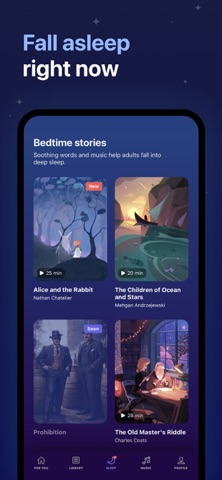


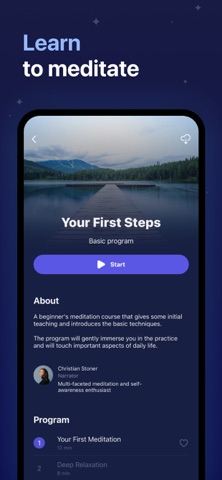

Mo Meditation, Sleep, Recovery targets a niche most wellness apps ignore: pairing sleep improvement and stress relief with specific habit-change programs for smoking, drinking, and similar behaviors. Built on psychologist-backed methodology and updated consistently since its June 2021 launch, the app claims over 4 million users and holds a 4.5 App Store rating from roughly 2,000 reviews. Sessions begin at four minutes, keeping the daily commitment realistic for beginners.
Behavioral recovery focus outperforms generic mindfulness
Where most competitors lean into generic mindfulness, Mo plants its flag on behavioral recovery. The app frames sleep improvement as a prerequisite for quitting smoking or reducing alcohol intake, a sequence grounded in actual research rather than marketing language. That structural logic gives the content a coherence that is rare in wellness apps. Short four-minute entry sessions lower the barrier enough that users can build a consistent routine before the programs demand more time. The psychologist and therapist involvement in content development adds genuine credibility to the methodology, and the habit-specific framing means each exercise has a stated purpose rather than a vague promise of calm. For users who have bounced off abstract mindfulness apps, that concreteness is a real differentiator.
Reasonable performance with active maintenance
At 146 MB, Mo sits in a reasonable range for a content-rich Health and Fitness app, though it is noticeably larger than purely audio-driven meditation tools. That size suggests video or animated elements beyond simple audio tracks, which can affect load times on older devices. The app carries a 4.5 rating from around 2,000 reviews, a solid score that points to a generally smooth user experience. Update version 1.1.89, released as recently as July 2026, signals active maintenance and suggests the developer is still resolving issues and adding content. One area worth monitoring is offline access: it is not clearly advertised whether sessions are available without a connection, which matters for users who travel or have inconsistent data coverage.
Free tier obscures paywall for core programs
Mo is free to download, and a free tier does exist, but in-app purchases are listed without a transparent breakdown of what is gated from the start. That lack of upfront clarity is a genuine friction point. The habit-change programs, which are the app's core value proposition, may sit behind a paywall, meaning users who download Mo specifically for smoking cessation or alcohol reduction support could hit a subscription prompt before reaching the content that drew them in. Before committing, prospective subscribers should explore the free tier thoroughly and confirm what the paid plan actually unlocks. If the structured programs are accessible at a reasonable subscription price, the value case is strong given the clinical framing.
Sensitive data practices require App Store verification
Mo carries a 12-plus content rating, which is consistent with an app discussing substance use and behavioral health. Because the app deals with sensitive personal data, including habit-tracking inputs and potentially health-related self-disclosures, privacy practices deserve close attention. We cannot independently verify what data is collected or shared without access to the App Store privacy nutrition label, which Apple requires all developers to complete. Before installing, users should review that label directly on the App Store listing. Pay particular attention to whether health and usage data is linked to your identity or shared with third-party advertising partners, a common practice in free, ad-supported wellness apps.
Four-minute sessions prioritize accessibility and consistency
The four-minute session structure reflects a considered design philosophy: meet users where they are rather than demanding long blocks of time immediately. That approach also benefits users with attention or anxiety challenges who may find lengthy guided sessions overwhelming. The 12-plus content rating suggests the interface and language are calibrated for a mature but broad audience. Standard iOS accessibility features such as Dynamic Type and VoiceOver compatibility are worth testing before relying on the app, particularly for users with visual impairments. The app's habit-specific focus means navigation is likely streamlined around a small set of program tracks rather than a sprawling content library, which generally aids clarity.
Five year update history signals sustained investment
The development record here is genuinely encouraging. Mo launched in June 2021 and has reached version 1.1.89 as of July 2026, a version number that implies frequent, iterative releases over five years rather than sporadic large drops. That cadence is a meaningful signal of ongoing investment. A claimed user base of 4 million also suggests the infrastructure has been stress-tested at scale, though the gap between that figure and the 2,000 App Store ratings is worth noting: a low review-to-user ratio can indicate passive rather than deeply engaged users. Still, the combination of recent updates and a substantial install base makes Mo a lower-risk download than many newer entrants in the behavioral wellness space.
Pros
- Habit-change focus on smoking and alcohol reduction sets it apart from generic mindfulness apps
- Four-minute entry sessions make daily consistency achievable for complete beginners
- Psychologist and therapist involvement lends genuine credibility to the program structure
- Version 1.1.89 updated July 2026 confirms active, ongoing development five years after launch
Cons
- Paywall boundaries are not transparent upfront, making it hard to assess free-tier value before downloading
- 146 MB install is larger than comparable audio-only meditation apps, which may affect older devices
- Only around 2,000 App Store ratings against a claimed 4 million users suggests limited active engagement from much of the install base
Related guides
Similar Health & Fitness apps


apptidal is independent and ad-supported. We earn no commission on installs and no company can pay for a better score. How we stay independent.