
Security · iOS
NextVPN: Fast & Secure Proxy
by Surf Safe Network Ltd
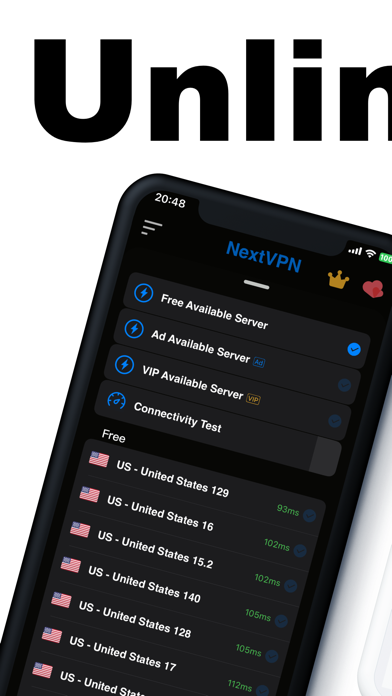
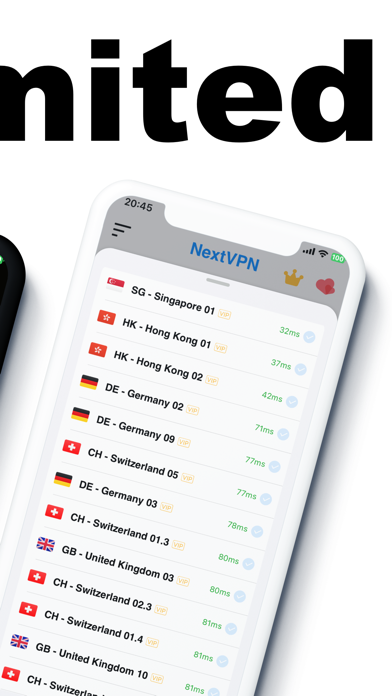
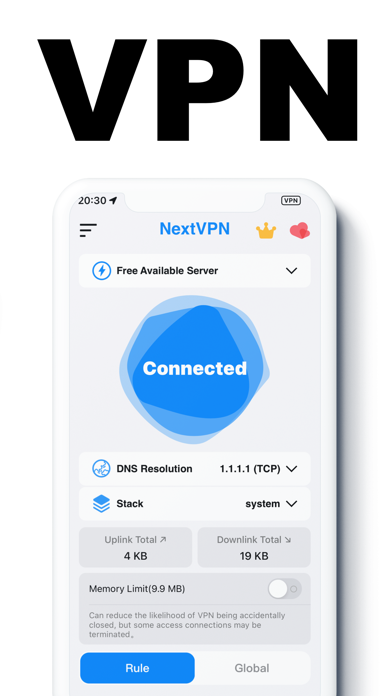
NextVPN distinguishes itself in a crowded free-VPN market by leaning on V2Ray and Xray protocols rather than aging OpenVPN setups. No account is required to get started, and a single-button interface keeps friction minimal. With 43,000 ratings averaging 4.67 stars and consistent updates through mid-2026, day-to-day satisfaction appears genuine. Persistent questions around server ownership, monetization, and unverified no-log claims remain the app's most significant unresolved concerns.
V2Ray and Xray protocols target restrictive networks
NextVPN routes traffic through V2Ray and Xray protocols, a meaningful step beyond apps still coasting on WireGuard or OpenVPN alone. Both protocols are engineered to disguise VPN traffic as ordinary HTTPS, making them particularly relevant for users in regions with aggressive deep-packet inspection. The single-button connection flow removes almost all onboarding friction, and no email or account registration is required. Whether the underlying implementation is technically sound is difficult to verify without published audits, but the protocol selection alone signals that the developer is targeting a more sophisticated audience than the typical free-tier VPN product.
High ratings suggest reliable daily performance
Qualitative signals point to solid reliability. A 4.67-star average across 43,000 ratings is a large, meaningful sample, and sustained positive sentiment at that scale is hard to fake over time. The 187 MB install size is moderate for the security category, sitting comfortably within norms for apps that bundle multiple protocol libraries. Updates have continued consistently into July 2026, suggesting active infrastructure maintenance rather than an abandoned project. Users in restrictive network environments appear to be the most vocal advocates, which aligns with the obfuscation-focused protocol choices. No specific speed or latency figures are claimed here, as those vary too widely by server load and user location to generalize honestly.
Free access with unclear funding model
The app is free with no stated subscription tier, which makes it immediately accessible. That zero-cost entry point is genuinely appealing for casual use cases like public-Wi-Fi protection or light geo-unblocking. The concern is that free VPN services require real infrastructure, and NextVPN does not publicly explain how server costs are covered. Whether that means advertising, data aggregation, or another model is not disclosed in available materials. Users comfortable with that ambiguity get a capable tool at no charge. Those who need a clearly audited, transparently funded service will find better-documented paid alternatives worth the expense.
No independent privacy audit or transparency report
No independent no-log audit is publicly cited, so any privacy claims made by the developer are unverified by a third party. The no-account model does reduce one obvious data-collection surface at signup, which is a genuine positive. Beyond that, the App Store privacy nutrition label is the most reliable source of truth for what data NextVPN actually collects and links to users. We strongly recommend reviewing that label before installing. Permissions typical of VPN apps include VPN configuration and network access, both expected, but users should confirm no unexpected entitlements are present. The absence of a transparency report or published privacy audit is the single biggest caveat for privacy-conscious users.
Single-button design prioritizes simplicity over configuration
The interface centers on a single connection button, which is about as low-friction as a VPN UI can get. Visual complexity is minimal, and the flow from launch to connected state requires almost no navigation. That simplicity benefits non-technical users considerably. On accessibility, the app carries a 4+ content rating, and the straightforward layout is generally compatible with larger text settings and basic VoiceOver navigation, though we cannot confirm full screen-reader optimization without hands-on testing. Advanced configuration options, such as kill-switch controls or per-app routing, are not prominently documented, which may frustrate power users but keeps the experience clean for the majority of the audience.
Active development continues into mid-2026
Version 3.3.15 was released on July 10, 2026, confirming active development more than four years after the app's March 2022 launch. That update cadence is a meaningful positive signal in a category where abandoned apps can become security liabilities. The version number itself suggests iterative refinement rather than a stagnant codebase. Server infrastructure maintenance is harder to assess from the outside, but the sustained high rating across a large user base implies that connectivity issues are being addressed reasonably promptly. For a free app, the maintenance record is one of its stronger selling points.
Pros
- V2Ray and Xray protocols provide traffic obfuscation well beyond what most free VPN competitors offer
- No registration required, removing a common data-collection touchpoint at onboarding
- Actively updated through July 2026, reducing the risk of a stale or abandoned security tool
- A 4.67-star average across 43,000 ratings represents a large, credible signal of day-to-day reliability
Cons
- No third-party no-log audit is publicly cited, leaving core privacy claims unverified
- The free, no-subscription model offers no public explanation of how server infrastructure is funded
- Server locations, ownership, and advanced features like a kill switch lack clear public documentation
Related guides
Similar Security apps


apptidal is independent and ad-supported. We earn no commission on installs and no company can pay for a better score. How we stay independent.