
Security · iOS
Ostrich VPN - Proxy Master
by GeWare Technology Limited
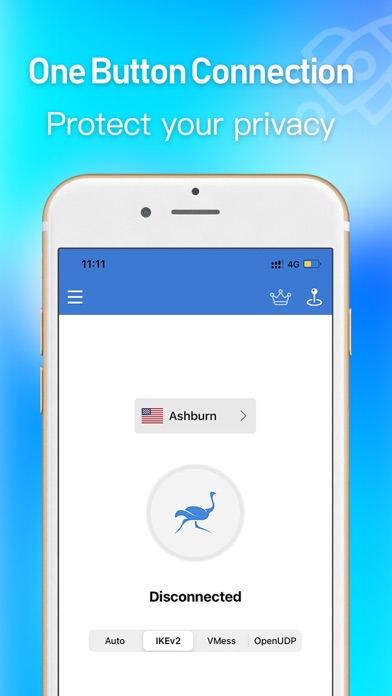
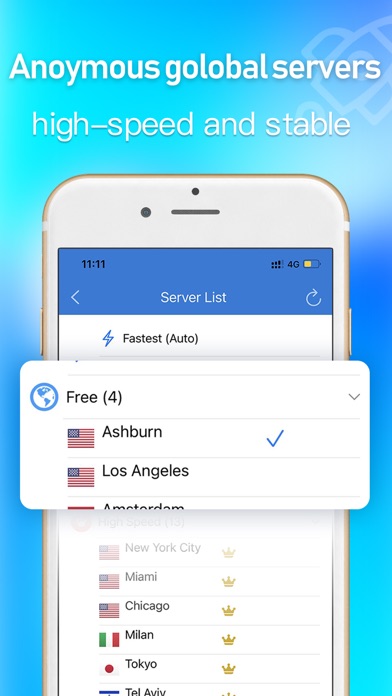
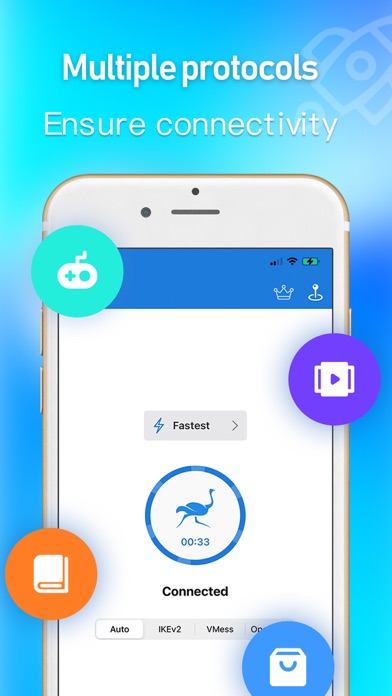
Ostrich VPN strips away the usual sign-up friction: no email, no password, just a single tap to connect. At 28 MB it sits lightly on any device, and the free tier is a real on-ramp for first-timers. Meaningful upgrades like ad removal, broader server selection, and faster throughput require a subscription starting around $4 a month, so the free experience is best treated as a sampler rather than a long-term solution.
No-registration simplicity masks limited transparency
Ostrich VPN functions as a proxy-backed VPN client aimed squarely at simplicity. The no-registration model is its clearest differentiator: where most VPN apps demand an account before showing a single screen, Ostrich puts a connect button front and center from the very first launch. That approach genuinely lowers the barrier for users who distrust handing over personal details. The core tunneling works as advertised for light tasks like securing a coffee-shop Wi-Fi session or bypassing basic geo-restrictions. What it does not do well is provide verifiable depth: server counts, protocol specifics, and no-log policy documentation are not prominently disclosed, which limits confidence for anyone with serious privacy requirements.
Lean install size, acceptable performance on premium
A 28 MB install size is a positive signal for a VPN app, suggesting a lean codebase rather than bloated dependencies. The 4.65 rating across roughly 23,000 App Store reviews indicates that most users find the connection experience acceptable, and consistent ratings at that volume are difficult to fake over time. Free-tier users, however, encounter ads and what the developer describes as reduced speeds, both of which degrade the everyday experience noticeably. Premium subscribers reportedly get faster connections and a wider server pool, though no independent benchmark data is available to confirm those claims. For occasional use the performance is serviceable; for streaming or large file transfers on the free plan, expectations should be modest.
Competitive pricing undercut by unaudited privacy claims
The free tier is genuinely free and requires no payment details upfront, which is more than many competitors offer. The 3-day trial that auto-renews to roughly $4 a month is a common industry pattern, but it warrants attention because the transition from trial to paid happens quickly and quietly. Annual billing will reduce the per-month cost, and at that price point Ostrich is competitive with budget VPN services. The value calculation depends heavily on whether the no-log claim can be trusted without an audit. Established providers at similar or slightly higher price points often publish third-party audit results, making them easier to justify for privacy-conscious subscribers.
Hong Kong developer, no third-party log audit
The app markets itself on a no-log, no-account premise, which is the right starting position for a privacy tool. GeWare Technology Limited is a Hong Kong-registered developer, a jurisdiction worth factoring into any personal threat model. Critically, no publicly available third-party audit of the no-log claim appears to exist at the time of this review. To understand exactly what data the app collects, readers should consult the App Store privacy label on the Ostrich VPN product page, which Apple requires developers to self-report. VPN apps by nature require a VPN configuration permission that grants significant network access, so reviewing those declared data practices before connecting is strongly advised.
Single-tap design lacks documented accessibility support
The single-tap connect model is one of the cleaner UX decisions in the VPN category, reducing cognitive load for users who find networking concepts intimidating. The interface follows broadly conventional iOS patterns, which means users familiar with the platform will orient quickly. The 4+ content rating confirms no objectionable material in the app itself. On formal accessibility, the App Store listing does not highlight VoiceOver optimization or Dynamic Type support, which are standard iOS accessibility features. Users who rely on assistive technologies should test the trial period specifically to verify that labels and interactive elements behave as expected before committing to a subscription.
Four years of updates, unclear security focus
A July 2025 update on an app first released in March 2021 represents a healthy maintenance record for a free security utility. Version 1.19 suggests steady, incremental development rather than a stagnant codebase, and continued updates in the security category matter because VPN protocols and iOS networking APIs evolve regularly. The 23,000-plus ratings accumulated over four years indicate a stable and growing user base, which generally correlates with continued developer investment. What remains less clear is whether updates address security vulnerabilities specifically or focus primarily on feature additions, a distinction that matters more for a privacy tool than for most app categories.
Pros
- No account or email required, enabling connection in under a minute
- Single-tap interface keeps the experience accessible for non-technical users
- Actively maintained with a July 2025 update confirming ongoing developer attention
- Compact 28 MB footprint with a 4+ content rating and broad iOS device support
Cons
- No publicly available third-party audit exists to verify the no-log privacy claim
- Free tier is hampered by ads and reduced speeds, pushing users toward a subscription
- Three-day trial auto-renews to a paid plan quickly, with limited upfront disclosure
Related guides
Similar Security apps


apptidal is independent and ad-supported. We earn no commission on installs and no company can pay for a better score. How we stay independent.