
Education · iOS
PopStudy: Language Learning
by Longtail Studios


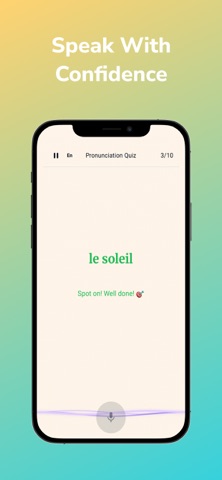


Released in late 2016 and updated as recently as June 2026, PopStudy targets serious learners of Spanish, French, and Chinese with a spaced-repetition core and an AI coaching layer. The 55 MB install stays lean, and the free entry point removes financial risk. Nine store ratings, however, make the 4.89 average a near-useless signal, so prospective users should treat the score as a placeholder rather than a reliable endorsement.
Spaced repetition drives three-language curriculum
PopStudy centers its entire curriculum on spaced repetition rather than treating it as an optional bonus. Vocabulary and grammar patterns resurface at timed intervals calibrated to push material toward longer-term retention, a meaningful structural choice for learners who have watched hard-won knowledge dissolve after a week away from a streak-based app. Layered on top is an AI coaching element that promises some degree of personalization beyond static flashcard decks. Covering Spanish, French, and Chinese within a single 55 MB download is ambitious, and Chinese in particular demands tonal audio and character work that many lightweight apps skip. Whether all three languages receive equal treatment is genuinely difficult to confirm from the available data, so probing the Chinese content early is advisable before committing to a long study plan.
Efficient build suggests stable performance
Qualitative performance signals are modestly encouraging. A 55 MB footprint sits well below the category average for multi-language apps, suggesting efficient asset management and a reasonable expectation of snappy load times on modern hardware. Version 11.0.2 represents substantial iteration over a decade-long lifespan, which typically correlates with meaningful bug-squashing and UI refinement across iOS generations. The June 2026 update confirms the app is not abandoned. That said, nine total ratings provide almost no crowd-sourced evidence about stability, crash frequency, or how the spaced-repetition engine behaves after months of daily sessions. Until the user base grows and leaves more granular feedback, performance assessments remain largely inferential.
Free model obscures full pricing
The free download removes any upfront financial barrier, which is the right model for an app with so little social proof. The critical unknown is the in-app purchase structure: the store listing does not specify whether paywalls gate individual languages, advanced AI coaching features, or longer study plans. Before investing significant time, users should map the full cost ceiling inside the app. If the core spaced-repetition engine and at least one complete language track are accessible without payment, the value proposition is strong relative to subscription-heavy competitors. If meaningful content sits behind an undisclosed paywall, the calculus changes considerably.
Privacy label is the source
We cannot responsibly characterize PopStudy's data practices without fabricating details. The authoritative source is the App Store privacy label on the app's product page, which discloses exactly which data types are collected, whether they are linked to your identity, and whether they are used for tracking. Language learning apps commonly request microphone access for pronunciation practice, so users should expect that permission prompt and decide whether to grant it. Reviewing the privacy label before or immediately after install is the most reliable way to understand what PopStudy asks for and why.
Interface targets broad audiences but needs testing
A 4+ content rating signals the interface is designed for broad audiences including younger learners, which generally correlates with clean visual hierarchy and straightforward navigation. Version 11.0.2 after nearly a decade of updates suggests the UI has been refined considerably from its 2016 origins. Whether the app supports Dynamic Type scaling, VoiceOver narration for screen-reader users, or sufficient color contrast for low-vision learners is not verifiable from store metadata alone. Users with specific accessibility requirements should test these features during the free trial window rather than assuming compliance. The lean install size does at least suggest the design avoids the heavy asset bloat that can slow navigation on older devices.
Decade of updates shows sustained commitment
The maintenance record is one of PopStudy's clearest strengths. A release date of December 2016 combined with a current version of 11.0.2 and a June 2026 update timestamp indicates Longtail Studios has sustained development across roughly a decade, an unusually long commitment for an indie education app. Major version numbers climbing to 11 imply substantive feature work rather than cosmetic patches. The small user community is a double-edged signal: it may reflect a niche but dedicated audience, or it may indicate limited organic growth. Either way, the developer's continued investment in updates provides a reasonable basis for trusting that critical bugs will be addressed and that the app will keep pace with iOS changes.
Pros
- Spaced repetition is the structural foundation of the curriculum, not a tacked-on feature
- Nearly a decade of active development from 2016 to version 11.0.2 signals genuine long-term commitment
- Free to download with a compact 55 MB footprint that suits storage-conscious users
- AI coaching layer offers a personalization angle that goes beyond static flashcard decks
Cons
- Only nine store ratings makes the 4.89 score statistically unreliable as a quality signal
- In-app purchase structure is undisclosed, leaving the true cost ceiling unknown
- Depth and quality across all three languages, especially Chinese, cannot be independently verified from available data
Related guides
Similar Education apps


apptidal is independent and ad-supported. We earn no commission on installs and no company can pay for a better score. How we stay independent.