
Security · iOS
VPN - Free VPN Potato ™
by FREE VPN POTATO PTE. LTD.

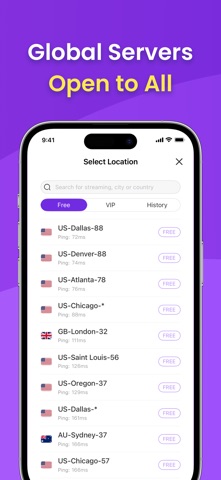
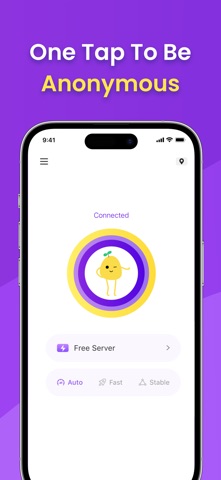

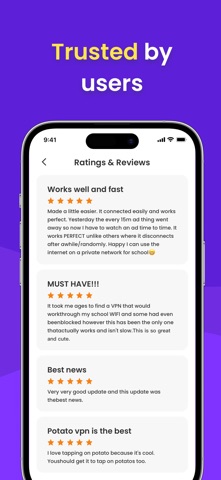
Available on the App Store since August 2019, VPN - Free VPN Potato has accumulated over 103,000 ratings at a 4.66 average, which is a genuinely strong signal for a free utility. The pitch is simple: tap connect, no signup required. Six server regions cover common use cases, the install weighs in at 103 MB, and updates continue into 2026. Ads fund the free tier, with premium features gated behind a subscription after a 7-day trial.
Simple IP masking without technical transparency
The core proposition is a no-registration VPN for iOS. Users pick from six named regions, including the US, Canada, UK, Germany, Singapore, and India, then tap to connect. For someone wanting to mask their IP on a public network or access region-locked content in one of those markets, the workflow is genuinely low-friction. What the app does not offer is any visible technical detail: no disclosed tunneling protocol, no published no-logs policy, and no mention of a kill switch. It handles the basics competently enough for casual use, but the absence of verifiable technical architecture means security-conscious users are largely taking the experience on faith.
Stable performance with ad interruptions on free tier
At 103 MB, the install footprint is reasonable for a VPN app on iOS and does not suggest unnecessary bloat. The 103,000-plus ratings at 4.66 stars indicate that a large volume of everyday users find the connection experience acceptable, which is a meaningful real-world signal. Update cadence is healthy, with the most recent version pushed in March 2026, suggesting the developer actively addresses compatibility with current iOS releases. That said, free-tier users will encounter ads between sessions, which introduces interruptions that a paid competitor would not. No quantitative performance claims can be made here, but the rating volume and update frequency together suggest a stable, functional daily driver for light use.
Free entry point undermined by ad friction
The app is free to download and usable without any payment, which lowers the barrier to entry as far as it can go. Ads are the trade currency on the free tier, and that is a real cost in user experience even if it is not a monetary one. A 7-day premium trial is offered, after which a subscription is required to remove ads and presumably unlock additional features. The store listing does not specify subscription pricing, so prospective buyers should check the current in-app purchase screen before committing. For genuinely occasional use where a few ad interruptions are tolerable, the free tier offers reasonable value. For regular daily use, the ad friction tips the equation toward evaluating paid alternatives.
Singapore jurisdiction cannot substitute for audit
This is the area that warrants the most caution. The developer is a Singapore-registered entity, and Singapore has no mandatory data-retention laws that would compel disclosure to foreign governments, which is a neutral-to-positive jurisdictional note. However, no independently audited no-logs policy, no named VPN protocol, and no transparency report are surfaced in any available public documentation. For a privacy tool, that silence is a meaningful gap. Prospective users should review the App Store privacy nutrition label directly, as that is the authoritative source for what data categories the app collects and links to identity. Permissions requested on iOS should also be reviewed at install time. Anyone with serious privacy requirements should seek an audited provider before relying on this app.
Minimal interface reduces accessibility barriers
The interface is built around simplicity: a connect button, a region selector, and minimal chrome. That design philosophy suits the target audience of users who want a VPN without learning one. The 4+ content rating confirms no mature content concerns. Accessibility features on iOS VPN apps typically rely on system-level VoiceOver and Dynamic Type support rather than custom implementations, and nothing in the available data suggests Potato VPN departs from that norm. The streamlined layout, with few interactive elements, should present fewer accessibility barriers than a feature-dense app, though users with specific assistive technology needs should verify VoiceOver compatibility on their own device before relying on it.
Regular updates since 2019 signal active maintenance
Version 22.9.11, updated in March 2026, reflects ongoing development more than six years after the original August 2019 launch. That longevity and update recency are meaningful reassurances for a free utility, where abandonment is a common risk. The high rating count also implies a large enough active user base to surface and motivate fixes for critical bugs. The version numbering convention suggests frequent release cycles. While the developer does not publish a public changelog or roadmap in the available facts, the combination of sustained updates and strong rating volume points to a product that is actively managed rather than left to stagnate.
Pros
- No registration or account creation required to start using the app
- Over 103,000 ratings averaging 4.66 stars reflects broad, sustained user satisfaction
- Actively maintained with updates as recent as March 2026, six-plus years after launch
- Six server regions on the free tier cover the most commonly needed markets
Cons
- No publicly disclosed VPN protocol, no-logs audit, or technical transparency documentation
- Free tier is ad-supported, creating real interruptions to the user experience
- Premium features require a paid subscription after the 7-day trial, with pricing not surfaced in store facts
Related guides
Similar Security apps


apptidal is independent and ad-supported. We earn no commission on installs and no company can pay for a better score. How we stay independent.