
Security · iOS
VPN - Super Unlimited Proxy
by Mobile Jump Pte Ltd


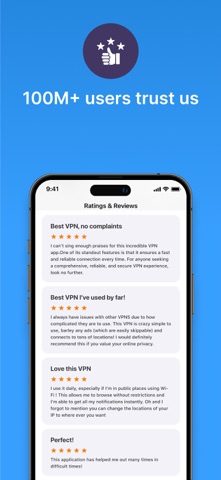
Released in 2018 and now carrying over 2.1 million App Store ratings, VPN - Super Unlimited Proxy is one of the most widely downloaded free VPNs on iOS. It promises no registration, broad server coverage, and unlimited bandwidth at no cost. The reality is more complicated: the free tier funnels toward a recurring subscription, and core privacy claims remain unverified by any independent audit.
One-tap connection works, verification does not
The core promise is frictionless one-tap connection, and on that narrow measure the app delivers. No account creation is required, the server list spans more than 40 locations to cover most common geographic needs, and the iOS build at version 2.43.0 feels current and responsive on modern devices. For the specific job of masking your IP on an untrusted cafe or hotel network, it clears the bar most casual users are actually aiming for. Beyond that modest scope, the cracks appear. The advertised server count and encryption claims are marketing language rather than independently verified specifications, so the gap between what is promised and what is provable is wide.
Moderate footprint with unpredictable distant server speeds
At 163 MB the install footprint is moderate for the category, and the app launches without friction. Connection times on nearby servers are generally quick enough for browsing and messaging, which aligns with what the 2.1 million raters appear to experience given the 4.63 average. That said, rating volume at this scale reflects download popularity more than technical rigor, and free VPN services are well known for inconsistent speeds on congested or distant servers. We have not run controlled speed measurements, and neither should any honest reviewer without a reproducible methodology. Expect acceptable performance for light tasks and treat anything more demanding as unpredictable.
Free trial converts to paid subscription automatically
The listed price is free, but that framing is generous. A 7-day trial auto-converts to a recurring paid subscription unless cancelled manually, a pattern that has drawn consistent criticism across the free VPN category. Users who miss the cancellation window will find themselves billed for a service whose privacy credentials are unverified. For genuinely sensitive use cases, a paid provider with a published, independently audited no-logs policy costs roughly the same as one billing cycle here and delivers meaningfully stronger guarantees. As a zero-commitment casual tool for very low-stakes browsing, the free tier has situational value, but the subscription mechanics deserve careful attention before you tap through the trial screen.
No-logs claim lacks independent audit verification
The app markets a no-activity-logs policy, but that claim carries no independent verification. No third-party audit is publicly cited, which means the promise rests entirely on the developer's word. To understand what data is actually collected, open the App Store product page and review the Privacy Nutrition Label under the App Privacy section. That label, which Apple requires developers to self-report, will show categories like usage data, identifiers, and diagnostics. Free VPN business models structurally depend on monetizing something, whether subscriptions, advertising, or data, so scrutinizing that label before connecting is essential. For anything beyond hiding your IP from a local network, an audited provider is the only defensible choice.
Simple design with frequent premium upsell prompts
The interface follows a familiar single-screen VPN pattern: a large connect button, a server selector, and minimal navigation overhead. That simplicity works in the app's favor for new users and keeps the learning curve flat. The iOS-native build respects system conventions, which means Dynamic Type scaling and standard tap targets are likely present, though we have not conducted formal accessibility testing. Users who rely on VoiceOver should verify that the connect button and server list are fully labeled before depending on the app. The design is functional rather than refined, with upsell prompts for the premium tier appearing frequently enough to clutter the otherwise clean layout.
Consistent updates since 2018 launch
The update record is a genuine strength. The app was last updated on July 13, 2026, which is recent by any measure, and the release history since the 2018 launch shows consistent version increments, now at 2.43.0. Regular updates matter for a VPN because protocol support, iOS compatibility, and security patches all require ongoing engineering attention. The developer, Mobile Jump Pte Ltd, has maintained the app across multiple iOS generations without apparent abandonment. That track record of maintenance is one of the few areas where this app compares favorably to smaller free VPN competitors that go months or years without updates.
Pros
- One-tap connection with no account or email required
- Server coverage across 40-plus locations suits most casual geographic needs
- Consistently updated, with version 2.43.0 released as recently as July 2026
- Simple, low-friction interface that new users can navigate immediately
Cons
- No-logs claim is unverified by any independent third-party audit
- Seven-day free trial auto-converts to a recurring paid subscription if not cancelled
- Free VPN business model creates structural incentives that conflict with genuine privacy protection
Related guides
Similar Security apps


apptidal is independent and ad-supported. We earn no commission on installs and no company can pay for a better score. How we stay independent.