
Social · iOS
Arc Social Inc.
by Arc Social Inc.


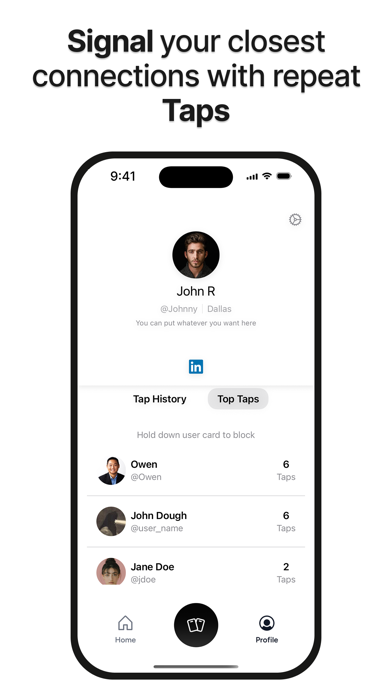


Arc Social is built around one core mechanic: logging in-person meetings as mutually confirmed 'taps,' with proximity validation keeping the data honest. At just 11 MB and launched in June 2025, this is clearly early-stage software. The concept is a welcome contrast to algorithmically bloated feeds, but execution remains thin and the live user base is very small, making the app feel more like a promising prototype than a finished product.
Tap verification creates authentic social graphs
Arc's defining mechanic is the tap: a mutual, proximity-validated confirmation that two people physically met. Both parties must agree, and both must be nearby, which prevents retroactive logging or fabricated connections. The result is a social graph that reflects real life rather than aspirational networking. Reviewing your tap history and top connections over time delivers a surprisingly candid picture of who you actually spend time with. The concept is executed cleanly for such an early build, and the dual-verification requirement is a meaningful differentiator. The weakness is not the idea itself but the surface area around it: discovery tools, contact suggestions, and richer profile features are either absent or underdeveloped, leaving the core mechanic feeling isolated.
Lightweight build suggests stable daily performance
At 11 MB, Arc is one of the lightest social apps on the App Store, which suggests a lean codebase with few heavy media pipelines to slow things down. Install footprint alone is a positive signal for snappy launch times and modest battery draw, though we cannot quote specific figures. The rapid version cadence, moving from launch in June 2025 to version 1.18.2 by April 2026, points to active iteration that likely brings both fixes and occasional instability. With only 15 store ratings, there is not enough user feedback volume to draw confident conclusions about crash rates or reliability. Day-to-day, the experience will feel sparse simply because the network is thin, not necessarily because the app itself is buggy.
Free entry, high social cost to value
Arc is free to download with no visible paywall blocking the core tap mechanic, which is the right call for a network-effect product that needs to lower every barrier to adoption. There are no subscription tiers or in-app purchases listed at this stage. The real cost is not monetary but social: the app demands that you recruit friends, colleagues, or event contacts before it delivers any meaningful value. For a solo installer, free still feels expensive in terms of time invested for near-zero return. For someone embedded in a group willing to try it together, the price-to-value ratio is genuinely strong.
Location access required, privacy label needs review
Because Arc's core feature requires proximity detection, location access is an expected permission. The app almost certainly also requests contacts or Bluetooth for the tap mechanic to function. Readers should review the App Store privacy nutrition label on Arc's product page directly, as that label is the authoritative source for what data is collected, how it is linked to your identity, and whether it is shared with third parties. Given that the app is built around logging real-world social interactions, understanding the data-retention policy for tap history is particularly worth scrutinizing before inviting others to participate.
Minimal interface avoids dark patterns
Arc's minimal install size and focused feature set suggest a deliberately uncluttered interface, which is a design strength at this stage. Avoiding the algorithmic feed model means there is no dark-pattern scroll trap to navigate. On accessibility, the App Store lists a content rating of 12-plus, and iOS apps built with standard UIKit components generally inherit Dynamic Type and VoiceOver support, though we cannot verify Arc's specific implementation without hands-on testing. The sparse feature set could actually benefit users who rely on assistive technologies, since there are fewer complex interactive elements to navigate. A more mature version of the app should publish explicit accessibility commitments.
Biweekly updates show active early development
The version history tells an encouraging story: Arc launched in June 2025 and reached version 1.18.2 by April 2026, indicating roughly one meaningful update every couple of weeks during its first year. That pace reflects a development team actively responding to early feedback rather than shipping and abandoning the product. The risk is that rapid iteration at this stage can introduce regressions alongside improvements. With a 15-rating sample size, the current 5-star average is statistically meaningless and should not be read as a reliability signal. The maintenance cadence is positive, but the app needs sustained growth in its user base to validate the continued investment.
Pros
- Proximity-based mutual verification makes tap data genuinely trustworthy and resistant to fabrication
- No algorithmic feed or manipulative scroll mechanics to work against
- Exceptionally small 11 MB install size signals a lean, focused codebase
- Free to download with no paywall blocking the core social-graph features
Cons
- A user base of 15 raters makes live feed and notification features feel hollow for most new installs
- Completely dependent on network effects, with no apparent discovery or contact-finding tools to accelerate growth
- Rapid early iteration is a double-edged signal, suggesting active development but also unresolved instability
Related guides
Similar Social apps


apptidal is independent and ad-supported. We earn no commission on installs and no company can pay for a better score. How we stay independent.