
Social · iOS
Circles: Mini Social Network
by Magnus Sveinbjornsson
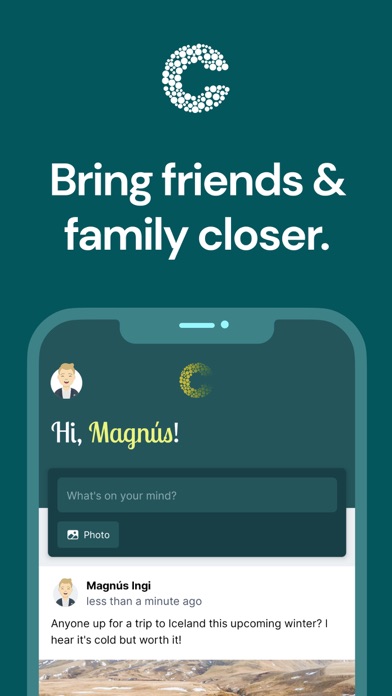
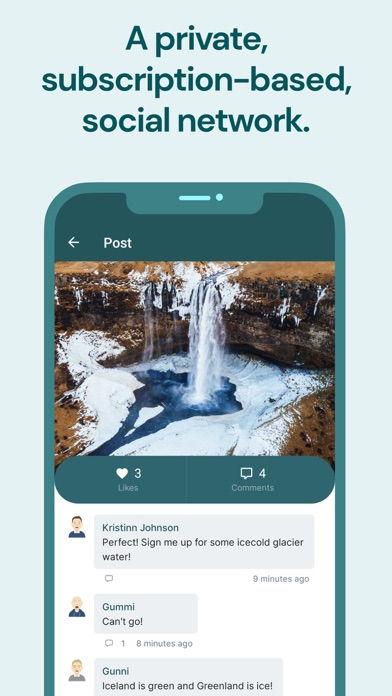
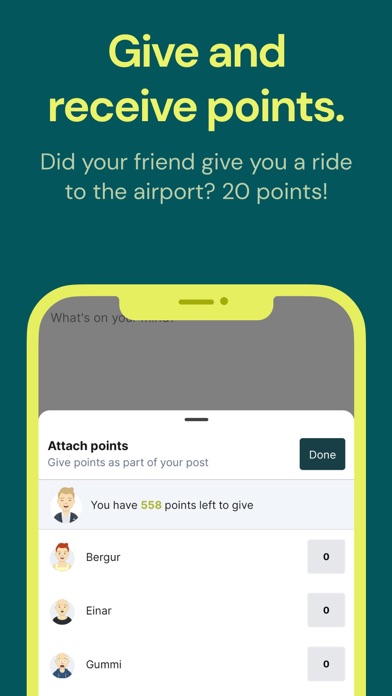
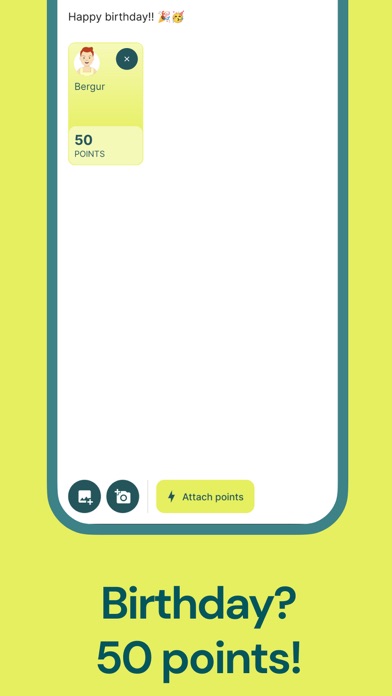
Built by solo developer Magnus Sveinbjornsson, Circles pitches itself as a private, ad-free gathering place for small groups. One person sponsors a Circle, everyone else joins free, and no ads or data brokers enter the picture. The core idea is genuinely compelling, but at version 0.4.1 the feature set is lean, the subscription pricing remains undisclosed, and a single store rating makes real-world reliability almost impossible to gauge.
Threaded comments shine, but feature set remains minimal
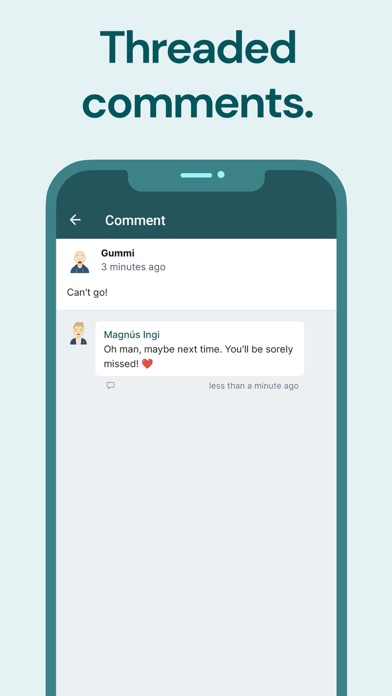
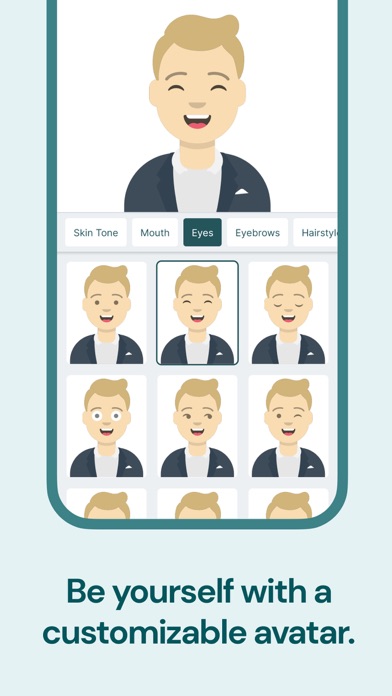
Version 0.4.1 ships posts, threaded comments, a custom avatar maker, a members list, and an email invite system. That is the complete feature inventory. Threaded comments are the standout piece, keeping small-group conversations readable in a way that flat feeds cannot match. The avatar maker is a small but thoughtful touch that reinforces group identity without requiring a profile photo. What is conspicuously absent is everything else: no media albums, no reactions, no stories, no direct messaging. The concept is proven in outline form, but the execution remains a skeleton. Groups accustomed to even a modest feature set on mainstream platforms will feel the gaps almost immediately.
Modest footprint masks sparse update history
At 56 MB the install footprint is modest for a social app, which suggests the codebase is not yet carrying the weight of heavy media features. Because there is only one store rating to draw from, there is no meaningful crowd-sourced signal on stability, load times, or crash frequency. What we can say is that the app received its most recent update in May 2024, roughly ten months after its July 2023 launch, which is a reasonable cadence for a solo-developer project but still leaves long gaps between fixes. Performance expectations should be calibrated accordingly: treat this as a functional proof of concept rather than a battle-tested social platform.
Free now, but subscription pricing remains undisclosed
The app is free to download and free to use during Early Access, so there is no immediate financial risk in testing it with a small group. The complication is what comes next. A subscription model is planned to fund the no-ads, no-data-broker promise, and that principle is sound. However, the pricing has not been publicly disclosed as of the current version, meaning any group that builds habits around Circles today is accepting an unknown future cost. For a family or small team willing to eventually pay a fair subscription for genuine privacy, the long-term value proposition could be strong. For anyone unwilling to commit blind, the uncertainty is a real obstacle.
Privacy promise requires independent verification
The stated privacy stance is the app's primary selling point: no advertising, no third-party data brokers, and a sponsor-pays model designed to keep user data out of the monetization equation. Those are meaningful structural commitments if upheld. That said, we cannot independently verify the specifics of data collection, on-device versus server-side storage, or encryption practices from the App Store listing alone. Prospective users should review the App Store Privacy Label under the app's listing, which Apple requires developers to self-report, and read any linked privacy policy before inviting family members or sharing personal content. The intent appears genuine; the documentation trail needs to mature alongside the product.
Clean design hampered by missing accessibility documentation
The interface is clean and minimal, which suits a product at this stage of development. A sparse feature set naturally reduces UI complexity, and the email invite flow lowers the barrier for less tech-savvy members of a family group. The custom avatar maker adds a layer of personality without demanding a real photo, which is a quietly inclusive design choice. Formal accessibility support, including VoiceOver compatibility, dynamic type scaling, and sufficient color contrast, is not documented in the store listing. Users with visual or motor accessibility needs should test the app personally before committing a group to it, as there is no third-party audit or developer accessibility statement available to reference.
Solo developer shows engagement but uncertain sustainability
Magnus Sveinbjornsson is a solo developer, and that context matters when evaluating the maintenance trajectory. The app launched in July 2023 and received an update in May 2024, which shows continued engagement but also reflects the slower cadence typical of a one-person project. Version 0.4.1 signals that the product is still well short of a stable 1.0 release. The single App Store rating provides no community momentum to pressure faster iteration. For users considering Circles as a long-term home for a family or friend group, the honest question is whether a solo developer can sustain the infrastructure and feature roadmap needed to compete with even lightweight alternatives. The potential is there; the track record is still being written.
Pros
- Clear structural privacy stance with no ads and no third-party data selling baked into the business model
- Threaded comments keep small-group discussions organized and readable without requiring a separate chat app
- Email invite system lowers the onboarding barrier for less tech-savvy group members
- Free during Early Access, removing any financial risk from an initial trial with a small group
Cons
- Feature set is extremely thin at version 0.4.1, with no media albums, reactions, or direct messaging
- Subscription pricing has not been announced, making any long-term commitment a financial unknown
- A single App Store rating and a solo developer behind the project make reliability and longevity difficult to assess
Related guides
Similar Social apps


apptidal is independent and ad-supported. We earn no commission on installs and no company can pay for a better score. How we stay independent.