
Social · iOS
Damus
by Damus Nostr, Inc

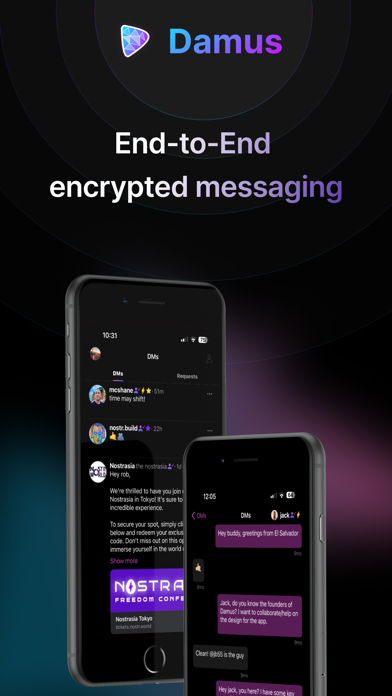


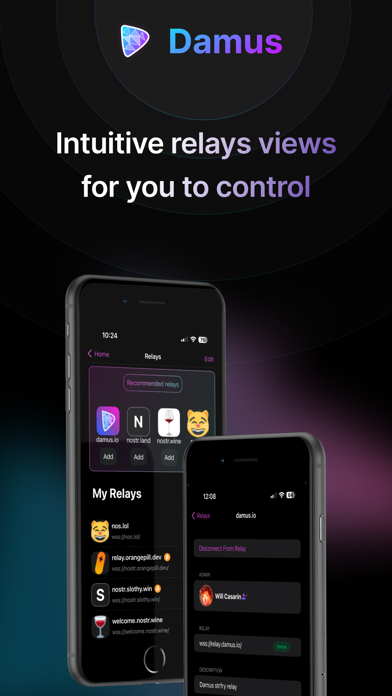
Damus is a free iOS client for the Nostr protocol, a decentralized open network where your identity is a cryptographic key pair rather than an email or phone number. Released in January 2023 and still receiving updates into mid-2026, it lets you post, follow, and message without any central platform controlling your account. The pitch is genuine freedom from deplatforming, but that same openness creates real friction for anyone expecting a polished, mainstream social experience.
Cryptographic identity replaces corporate accounts
Damus connects you to the Nostr protocol, where your identity is a self-generated cryptographic key pair rather than a corporate account. No phone number, email address, or real name is required to get started, which immediately separates it from virtually every mainstream competitor. End-to-end encrypted direct messaging means nobody in the relay chain can read your conversations. The built-in Lightning tipping integration is a concrete, working feature rather than a roadmap promise, allowing small bitcoin micropayments directly to other users without leaving the app. For its target audience, these are not minor perks but foundational capabilities that justify the learning curve.
Relay health creates inconsistent performance
At 98 MB, the install footprint is reasonable for a social app in this category. The 4.75 rating across 679 App Store reviews suggests a satisfied, if niche, user base rather than broad mainstream adoption. Performance in daily use is meaningfully tied to relay health: post delivery and feed loading depend on which relays you and your contacts connect to, so the experience can feel inconsistent compared to a centralized platform. The interface functions but still reads closer to a developer tool than a consumer product, with terminology and settings that assume some protocol familiarity. Casual scrolling works, but power features demand patience.
Free entry demands time investment
Damus is free to download and carries no subscription fee, which makes the barrier to entry essentially zero. Lightning tipping is opt-in and peer-to-peer, so there are no platform fees extracted by Damus itself. The real cost is time: understanding relays, safeguarding your private key, and navigating a smaller content ecosystem all require genuine investment. For users to whom censorship resistance and data ownership matter practically, that investment pays off. For casual users simply looking for a Twitter alternative with a familiar feel, the hidden cost in friction is likely higher than it appears at first glance.
Structural privacy with user key responsibility
The structural privacy case for Damus is strong: no central database holds your identity, no company can harvest your account credentials, and direct messages use end-to-end encryption. That said, we recommend reviewing the App Store privacy label directly on the Damus listing, as it is the authoritative source for what data the app declares it collects and how it is used. One critical privacy caveat applies to all Nostr clients: public posts are broadcast to relays and are essentially permanent and public by design. Losing your private key also means permanent, unrecoverable account loss, so key management is a real security responsibility placed entirely on the user.
Functional design lacks mainstream polish
The design is functional and clean enough for its audience, but it has not yet reached the level of polish expected by mainstream social app users. Navigation follows familiar social conventions (feed, notifications, profile, DMs), which helps newcomers orient themselves quickly. Where the experience stumbles is in onboarding around Nostr-specific concepts like relays and key management, which receive minimal guided explanation. Accessibility features follow standard iOS conventions, and the app benefits from Apple's platform-level support for Dynamic Type and VoiceOver, though we cannot confirm the depth of their implementation without hands-on testing. A content rating of 17-plus reflects the unmoderated nature of the network.
Three years of sustained development
The update history here is genuinely encouraging. Damus launched in January 2023 and reached version 1.17 with an update recorded as recently as June 2026, indicating sustained development across more than three years. For an open-protocol client in a niche category, that longevity is a meaningful signal of developer commitment. The Nostr ecosystem itself continues to evolve, and Damus has tracked those changes rather than stagnating. The relatively modest review count of 679 ratings reflects a dedicated rather than massive user base, but the consistent maintenance cadence suggests the project is not at risk of abandonment in the near term.
Pros
- No phone number, email, or real name required to create an account
- End-to-end encrypted direct messages protect conversations from relay operators
- Built-in Lightning tipping works natively without any third-party app
- Actively maintained through mid-2026, now at version 1.17
Cons
- Post delivery can be unreliable depending on the relay network you and your contacts use
- Spam and low-quality content surface freely with no centralized moderation layer
- Losing your private key results in permanent, completely unrecoverable account loss
Related guides
Similar Social apps


apptidal is independent and ad-supported. We earn no commission on installs and no company can pay for a better score. How we stay independent.