
Social · iOS
Hush: Real Talks, Deep Chats
by Blyynd

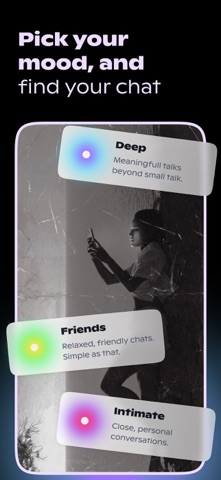
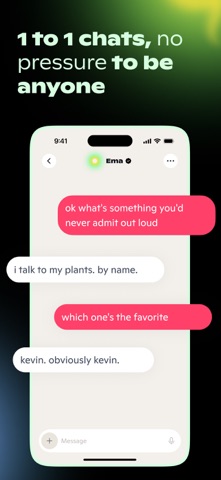


Hush is a free iOS social app built around a mutual-interest gate: neither party can message the other until both have expressed interest. Phone verification and age confirmation filter out throwaway accounts from the start. Released in July 2024 and carrying a 4.16 rating across roughly 2,000 reviews, it has genuine early traction. At 173 MB it is not a lightweight install, and its long-term promise depends heavily on community growth.
Mutual consent design reduces harassment
The core mechanic is straightforward and deliberate: no cold messaging is allowed under any circumstances. Both users must independently signal interest before a conversation channel opens, which fundamentally changes the social pressure most apps create. Profiles are tied to verified phone numbers, so participants arrive with at least a nominal commitment to a consistent identity. That friction is a genuine design choice rather than an oversight, and for users worn down by anonymous harassment on larger platforms it reads as a real differentiator. The 17-plus content rating signals the platform is not pretending to be a children's product, which adds a layer of honesty. Whether the execution matches the philosophy depends on how well moderation enforces the identity-first promise, and that detail remains underspecified publicly.
Large install size lacks explanation
Qualitative signals here are mixed. A 173 MB install is notably large for an app whose primary activity is text-forward conversation, and the developer has not publicly explained what accounts for that footprint. Possible contributors include onboarding media, local caching, or richer profile assets, but without transparency it is a legitimate concern on storage-limited devices. On the positive side, version 5.8.0 and a July 2026 update date confirm the app has been revised meaningfully and recently, suggesting the team is actively addressing bugs and performance issues. A 4.16 average across 2,000 reviews is a healthy signal for an app under two years old, indicating that daily use is satisfying enough for most people to leave a positive score rather than a complaint.
Free trial with unclear monetization
Hush is free to download, which removes any barrier to trying the concept. The app does list in-app purchases as possible, but the scope and pricing of those purchases are not clearly communicated in publicly available information. That ambiguity is worth watching: a platform built on trust and intentional connection should be equally transparent about how it eventually monetizes its users. For now, the zero upfront cost makes a trial low-risk. If premium tiers emerge that gate core features like expanded matching radius or read receipts, the value calculus will shift considerably and deserve a fresh look.
Phone verification increases accountability risk
Hush collects a verified phone number as part of onboarding, which is more personally identifying than email-only sign-ups common elsewhere. What the app does with that number, whether it is stored, hashed, shared with third parties, or used for marketing, is governed by the developer's privacy policy and the App Store privacy nutrition label. We recommend checking both before signing up. The 17-plus content rating and the identity-verification requirement suggest the team has thought about accountability, but accountability for users is a separate question from how the platform itself handles the data it collects. Permissions requested on install, such as camera, microphone, or contacts access, are worth reviewing at the iOS prompt stage.
Profile design reduces appearance filtering
The app's design philosophy, reducing appearance-based filtering while still allowing profile expression, points toward a considered UX approach. The optional nature of certain visual profile details suggests the team is aware that leading with photos can replicate the shallow dynamics Hush is trying to avoid. Standard iOS accessibility features such as Dynamic Type and VoiceOver compatibility depend on how carefully the developer has implemented native UI components; nothing in the available data confirms or denies full compliance. At version 5.8.0 the interface has had meaningful iteration time, and the healthy rating average suggests most users are not encountering severe usability friction in everyday navigation.
Consistent updates since July 2024
The maintenance record is one of Hush's clearest strengths. Launched in July 2024 and updated as recently as July 2026, the app has received consistent developer attention across its entire lifespan. Reaching version 5.8.0 in roughly two years implies a cadence of meaningful releases rather than cosmetic version bumps. For a social platform, active maintenance matters beyond bug fixes: it signals that the team is still investing in safety tooling, feature development, and community health. That said, update frequency alone cannot substitute for transparent moderation policies, which remain the most publicly underspecified part of the Hush experience.
Pros
- Mutual-like gate prevents unsolicited cold messaging, changing the social dynamic meaningfully
- Phone verification and age confirmation reduce the anonymous throwaway accounts common on rival platforms
- Version 5.8.0 with a July 2026 update confirms consistent, active developer maintenance
- Free to download with a 4.16 average across 2,000 reviews, suggesting genuine early user satisfaction
Cons
- 173 MB install size is disproportionately large for a text-forward app with no public explanation
- In-app purchase scope remains unspecified, leaving the long-term monetization model opaque
- Community launched mid-2024, so user density in smaller or less urban markets may be too thin for the mutual-like system to function reliably
Related guides
Similar Social apps


apptidal is independent and ad-supported. We earn no commission on installs and no company can pay for a better score. How we stay independent.