
Education · iOS
Language Learning: Pingo AI
by Pingo AI, Inc.

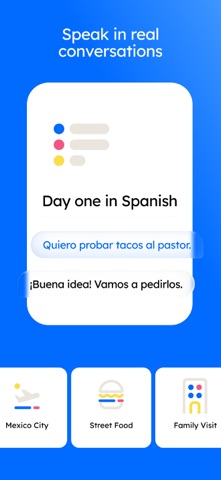

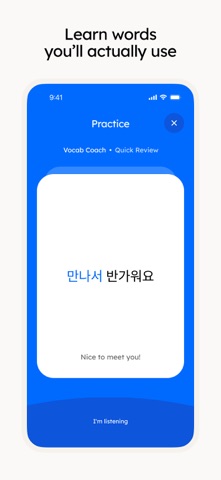
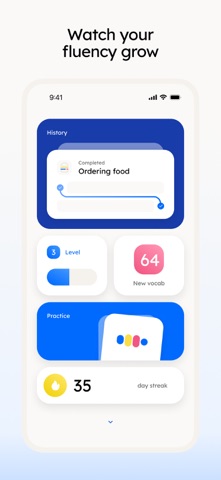
Pingo AI centers its experience on AI-driven conversation rather than flashcard drills or gamified point systems. The app supports more than 25 languages in a lean 87 MB package, has attracted over 13,000 App Store ratings averaging 4.63 stars, and reached version 5.0.2 by mid-2026 despite launching only in December 2024. The core pitch is straightforward: talk your way toward fluency instead of tapping through it.
Speaking practice replaces grammar drills as primary mechanic
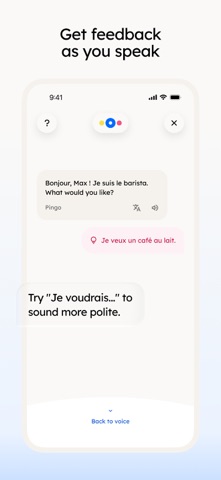
Rather than treating speaking as a bonus mode unlocked after enough grammar quizzes, Pingo makes spoken dialogue the primary mechanic from the first session. Users set goals, then work through scenario-based conversations ranging from ordering food to discussing current events, with the AI providing instant feedback on pronunciation and word choice. That feedback loop is the genuine differentiator: it replicates the correction cycle of a live tutor without the scheduling friction. For learners who stall precisely because they never actually open their mouths, this structure dismantles a very real psychological barrier. The execution appears solid enough to earn a 4.63 rating across a meaningful 13,000-review sample, which is a credible signal of consistent quality rather than a small-sample outlier.
Modest footprint and frequent updates suggest stable performance
At 87 MB the install footprint is modest by modern app standards, leaving little reason for the kind of storage-related hesitation that plagues heavier edtech titles. The update history is telling: version 5.0.2 arrived in July 2026 for an app that launched in December 2024, meaning the team shipped roughly five major version increments in about eighteen months. That cadence typically correlates with active bug resolution and performance tuning. Qualitatively, a 4.63 rating held across 13,000 reviews suggests the experience is stable enough that most users are not abandoning it after a frustrating session. Conversation-dependent apps do rely on server responsiveness, so performance on slower connections may vary, but no widespread complaint pattern is evident from the rating data.
Free entry point obscures in-app purchase transparency
Pingo is free to download, which makes the barrier to entry essentially zero. In-app purchases are present, though the exact pricing tiers and what features they unlock are not surfaced transparently before download, which is a genuine friction point for budget-conscious learners. The free tier appears functional enough to evaluate the core conversation mechanic before committing any money. Compared with human tutoring platforms that charge per session, even a mid-tier subscription would likely represent significant savings for learners who practice frequently. The value calculus is most favorable for intermediate learners who will actually use the speaking features regularly rather than dabbling occasionally.
Voice processing requires careful privacy label review
A conversation-based language app necessarily processes voice audio, which places it in a category that warrants careful privacy review. The App Store privacy label for Pingo is the authoritative source for understanding exactly what data is collected, how it is used, and whether it is linked to your identity or shared with third parties. We recommend reviewing that label before granting microphone access. Standard questions to ask of any app in this category include whether voice recordings are retained after processing, whether data is used to train AI models, and what third-party SDKs are present. The 4+ content rating indicates no objectionable content, but that label speaks to content rather than data practices.
Conversation design demands audio and feedback clarity
The app's strong rating and rapid user growth suggest the interface is intuitive enough that most people can reach the core conversation feature without a steep onboarding curve. A conversation-first design inherently demands clear audio controls, responsive microphone input, and readable feedback displays, all of which are table-stakes for the format to work at all. Accessibility considerations worth checking include VoiceOver compatibility for navigation elements, sufficient color contrast for feedback text, and whether captions or text alternatives accompany audio output. These details are best verified on device, as they are not inferable from store metadata alone. The 87 MB size does not suggest the kind of asset-heavy build that sometimes correlates with cluttered or slow interfaces.
Eighteen months of updates signal active development
The development pace here is one of Pingo's clearest strengths. Launching in December 2024 and reaching version 5.0.2 by July 2026 reflects a team that is iterating on user feedback rather than letting the product stagnate post-launch. Regular updates matter especially for AI-driven apps, where model quality, scenario variety, and language coverage can all improve meaningfully over time. The 13,000-review count for an app under two years old also indicates genuine user retention rather than a spike-and-drop download pattern. The main caveat is that the app is still relatively young, so long-term content depth across all 25-plus languages remains an open question that only continued development will answer.
Pros
- Conversation-first design directly addresses the speaking gap that most language apps treat as secondary
- Instant AI feedback on vocabulary and pronunciation replicates the correction cycle of a live tutor
- More than 25 languages packaged into a lean 87 MB install with a free entry point
- Strong 4.63 rating held across 13,000 reviews signals consistent, stable user experience
Cons
- AI training data and scenario variety are almost certainly uneven across popular versus niche language tracks
- Pure conversation format offers little structured scaffolding, leaving true beginners without a foundation to build on
- In-app purchase tiers and what they gate are not disclosed transparently before download
Related guides
Similar Education apps


apptidal is independent and ad-supported. We earn no commission on installs and no company can pay for a better score. How we stay independent.