
Social · iOS
Rabbithole - Social Networking
by Collective Theory Corp

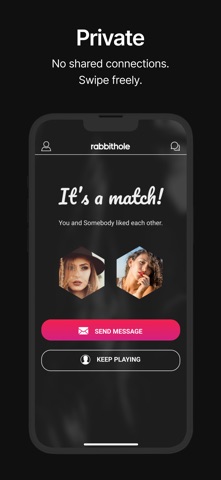

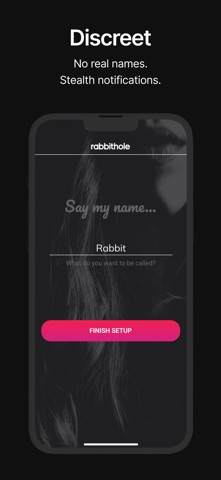
Rabbithole from Collective Theory Corp landed on the App Store in November 2025 at version 1.0.0, promising friend discovery, group creation, and community conversations inside a lean 26 MB package. It carries a 17-plus content rating, costs nothing to download, and has accumulated zero user ratings so far. That combination of signals places it firmly in ground-floor territory, where potential and uncertainty exist in equal measure.
Compact social app with unproven network effects
The core proposition is familiar: find people, form groups, and hold conversations around shared interests. Rabbithole does not appear to reinvent that loop, but it packages it into a notably compact install for a social app. At 26 MB the download is lighter than most competitors in the category, which suggests a restrained feature set rather than a sprawling platform. Whether that restraint is a deliberate design philosophy or simply a reflection of how early the product is remains unclear. A social network's real utility scales directly with its population, and with no ratings and a November 2025 release, the rooms are almost certainly sparse. The concept is coherent; the execution is unproven.
Early stability uncertain despite modest footprint
Concrete performance data is impossible to cite at this stage given the absence of any user reviews or third-party testing. What the available signals do suggest is cautiously neutral. A 26 MB footprint typically points to modest asset loads and limited background processing, which can translate to snappy navigation on modern iPhones. The one-day gap between the November 14 release and the November 15 update is a double-edged signal: it shows the team is watching the live build closely, but it also hints that something needed fixing almost immediately after launch. Version 1.0.0 products in any category routinely carry stability rough edges, and social apps add network-latency variables on top of that baseline.
Free entry with unknown monetization ahead
Rabbithole is free to download with no stated upfront price, which removes all financial friction from trying it. The 17-plus content rating is worth noting for households with younger users, though it does not imply a paid tier. What remains genuinely unknown is the long-term monetization model. The app is listed as free, but no information is available about whether advertising, in-app purchases, or a subscription tier will be introduced as the platform matures. For now the cost of entry is zero dollars, so the only real investment is time, and on a nascent network that time cost is non-trivial if connections and conversations are slow to materialize.
Privacy details require App Store verification
No independently verified privacy findings are available for this app. The definitive source to consult is the App Store privacy nutrition label on Rabbithole's product page, which Apple requires developers to self-report. Before creating an account, reviewers recommend checking which data types are collected, whether any data is linked to your identity, and what is shared with third parties. Social networking apps as a category commonly request access to contacts, notifications, and camera or photo libraries. Verifying exactly which permissions Rabbithole requests at install and during onboarding is a prudent step, particularly given that the developer, Collective Theory Corp, has no established public track record to draw on yet.
Minimal interface may aid accessibility testing
With no user reviews and no third-party coverage to reference, design quality can only be assessed against category norms and the available metadata. A 26 MB package suggests a relatively minimal interface, which can be a genuine accessibility advantage: lighter apps often load faster on older devices and impose less cognitive load. Whether Rabbithole supports Dynamic Type, VoiceOver, or sufficient color contrast cannot be confirmed without hands-on testing. The 17-plus content rating does not speak to interface maturity. First-version social apps frequently prioritize feature scaffolding over polish, so prospective users with accessibility needs should test the onboarding flow personally before committing to the platform.
One-day patch shows attention, not track record
The one-day turnaround between release on November 14 and an update on November 15, 2025 is the strongest positive signal in the entire data set. It demonstrates that Collective Theory Corp is monitoring crash reports or user feedback and is willing to ship fixes quickly. That responsiveness matters for a 1.0.0 product. The concern is that a single rapid patch does not yet constitute a maintenance track record. Sustained development over multiple update cycles, growing version numbers, and a changelog that addresses community-reported issues would all be needed before the maintenance picture looks genuinely encouraging. Checking back after several months of updates would give a much clearer picture of the team's long-term commitment.
Pros
- Completely free to download with no paywall blocking core features at launch
- Lightweight 26 MB install keeps storage impact and download time minimal
- Group creation tools give early users a real mechanism to organize around specific interests
- A same-week patch on day one shows the developer is actively monitoring the live build
Cons
- Zero user ratings means there is no community proof of concept or social proof to evaluate
- Version 1.0.0 carries the typical stability and polish rough edges of a first public release
- Friend and community discovery is only as valuable as the current user population, which appears very small
Related guides
Similar Social apps


apptidal is independent and ad-supported. We earn no commission on installs and no company can pay for a better score. How we stay independent.