
Utilities · iOS
Tomorrow.io: Weather Forecast
by The Tomorrow Companies, Inc
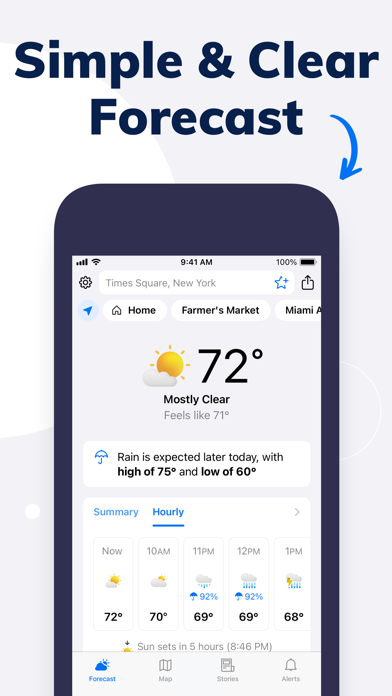
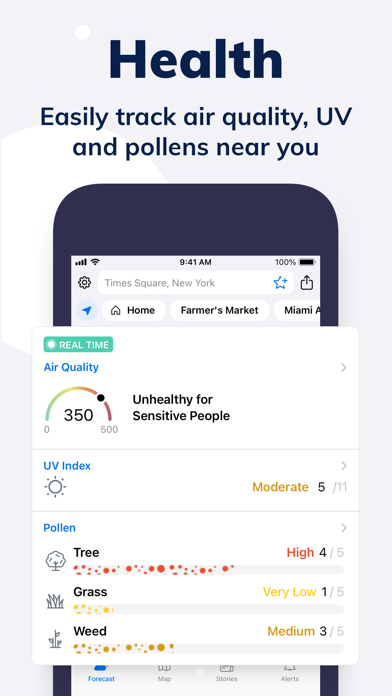
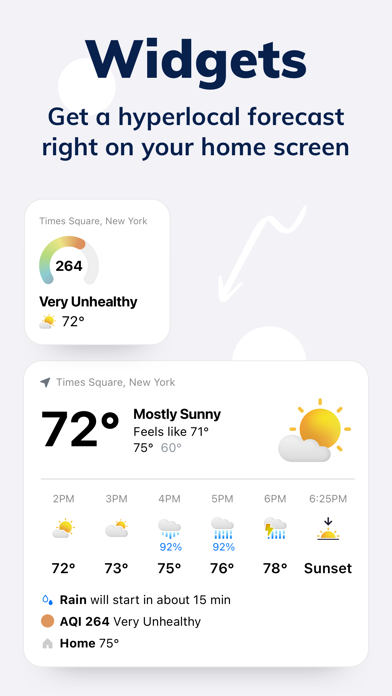
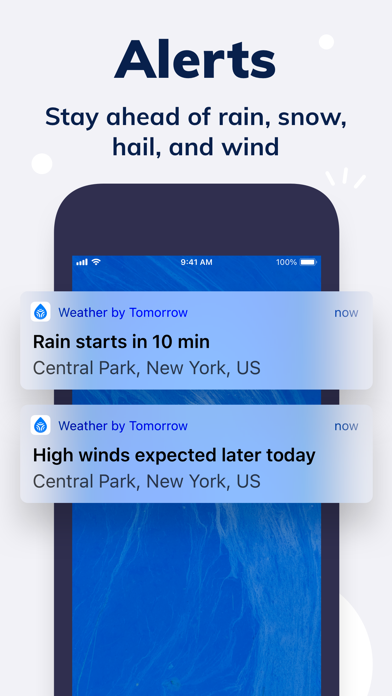


Built on the same proprietary MicroWeather modeling that Tomorrow.io sells to aviation and logistics clients, this consumer app brings industrial-grade granularity to everyday decisions. A 4.63 rating across 28,000 App Store reviews signals broad satisfaction, and consistent updates through mid-2026 confirm the team is actively invested. The 371 MB footprint is substantial, but the depth of data layers, covering air quality, precipitation type, and wind, justifies the trade-off for serious users.
Hyper-local precision with real limits
Tomorrow.io's core promise is hyper-local precision, and it largely earns that claim. Rather than broad hourly windows, the app delivers rain alerts tied to specific minutes and forecasts refined to city-block resolution, a level of detail that outlets including Fortune have noted is not mere marketing in urban environments. Air quality indices, wind speed map overlays, and precipitation-type breakdowns push the feature set well beyond what typical weather utilities attempt. Accuracy does occasionally slip in rapidly shifting microclimates, where even sophisticated modeling has real limits, but the gap between this app and a standard forecast remains noticeable and meaningful in everyday use.
Substantial install size slows setup
A 371 MB install is a meaningful commitment for a utility, and first-time setup reflects that weight with a longer-than-average load. Once running, the app is kept current by frequent updates, the most recent landing in July 2026, which suggests performance regressions are addressed promptly. The layered interface rewards exploration but can feel slow to navigate for a quick temperature check. Users who configure their preferred data views upfront will find daily interactions much smoother. The strong 28,000-review rating base suggests most users settle into a comfortable routine rather than abandoning the app over friction.
Free tier sufficient for casual users
The base app is free, which makes the entry point genuinely risk-free. Like most freemium weather apps, Tomorrow.io gates certain premium features, likely extended forecast ranges or ad removal, behind in-app purchases or a subscription tier. Casual users checking daily conditions will find the free offering capable. Power users who rely on the full data layer suite for planning outdoor events, athletic training, or professional logistics will likely find a paid upgrade worthwhile given the modeling pedigree behind the product. Reviewing the current subscription terms in the App Store before committing is always advisable, as pricing tiers can change between app versions.
Location access necessary and expected
Precise location access is central to the app's street-level forecast promise, so that permission request is expected and reasonable. Beyond location, users should review the App Store privacy nutrition label on the app's product page, which is the authoritative source for what data Tomorrow.io collects, links to your identity, and shares with third parties. As a company that also sells weather data services commercially, understanding how consumer app usage data factors into that broader business model is worth a few minutes of reading before granting permissions. Nothing in the public record raises specific red flags, but informed consent matters.
Polished design with steep learning curve
Tomorrow.io's visual design is polished and map-centric, with animated weather layers that communicate complex data intuitively. The information hierarchy is logical for engaged users, though the depth of available panels can initially overwhelm newcomers expecting a simpler layout. Dynamic Type support and standard iOS accessibility conventions are typical for apps in this category, but users who rely on VoiceOver or other assistive technologies should verify compatibility personally, as data-dense map interfaces can vary in screen-reader friendliness. A brief onboarding flow helps orient new users, though a more guided tutorial for the advanced layers would reduce the learning curve further.
Seven years of consistent updates
Active maintenance is one of Tomorrow.io's clearest strengths. The app launched in June 2019 and has reached version 2.17.22, reflecting years of iterative refinement. The July 2026 update confirms the development team is still shipping improvements well into the app's seventh year. A 28,000-review sample that sustains a 4.63 average rating suggests user-reported issues are being addressed rather than accumulating. For a weather app, where forecast model improvements and iOS compatibility updates are ongoing necessities, this track record of consistent upkeep is a meaningful quality signal.
Pros
- Minute-by-minute rain alerts are specific and actionable rather than vague hourly estimates
- Street-level forecast granularity, backed by commercial-grade MicroWeather modeling, stands out against most competitors
- Air quality indices, wind speed overlays, and precipitation-type layers add genuine utility well beyond basic forecasts
- Consistently maintained with a July 2026 update and a strong 4.63 rating across 28,000 reviews confirming long-term reliability
Cons
- At 371 MB, the install size is heavy for a weather utility and demands meaningful storage
- The layered, data-dense interface is more than casual users need for a quick conditions check
- Hyper-local accuracy can still falter in fast-changing microclimates, where even strong modeling has inherent limits
Related guides
Similar Utilities apps


apptidal is independent and ad-supported. We earn no commission on installs and no company can pay for a better score. How we stay independent.