
Finance · iOS
Cashew - Expense Budget Tracker
by James Kokoska


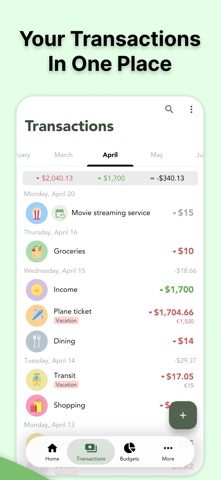
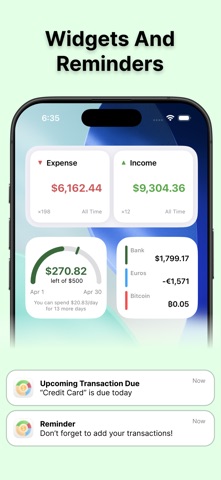

Launched in September 2023 and already carrying 420 ratings that average just under 5 stars, Cashew covers the full personal finance loop: logging transactions, building budgets on custom time frames, tracking subscriptions, and reviewing spending through charts. At 100 MB and free to download, the barrier to trying it is essentially zero. For a one-developer project, the momentum and update cadence are genuinely impressive.
Customizable periods and subscription tracking stand out
Cashew handles the core personal finance cycle with more flexibility than most free competitors. Budget periods are fully customizable, so users paid bi-weekly or on irregular cycles can set a window that mirrors their actual cash flow rather than a generic calendar month. Spending breakdowns arrive as pie charts and bar graphs, making category creep visible at a glance without requiring a deep dive into raw transaction lists. Subscription tracking is treated as a first-class feature rather than a buried setting, with reminders surfacing recurring charges before they quietly drain an account. The combination of these elements in a free, compact package is the clearest reason the rating sits so high.
Recent updates and high review volume suggest stability
Qualitative signals point toward a smooth experience. A 100 MB install is modest for a finance app with charting capabilities, suggesting the developer has kept asset bloat in check. Version 5.8, released as recently as July 2026, indicates active optimization rather than a codebase left to stagnate. The volume of ratings, 420 reviews averaging 4.93, is statistically meaningful for an app under two years old and implies that day-to-day crashes or data-loss bugs would have surfaced prominently in user feedback by now. Manual transaction entry is the expected workflow, so performance depends more on UI responsiveness than on network calls, which generally favors stability.
Free tier appears generous despite unclear premium scope
The free price point removes any hesitation about trying Cashew. What remains unclear from publicly available data is the full scope of any in-app purchases or optional premium tiers. Users should check the App Store listing for current subscription or unlock pricing before building a long-term workflow around features that might sit behind a paywall. Even if a paid tier exists, the free layer appears generous enough to satisfy casual budgeters. Compared to established paid competitors in the Finance category, Cashew offers a compelling starting point, particularly for users not yet ready to commit to a monthly subscription elsewhere.
Manual entry may limit credential exposure
Cashew carries a 4+ content rating, the most permissive tier, which suggests Apple found no mature or sensitive content concerns during review. Because the app appears to rely on manual entry rather than confirmed automatic bank sync, the volume of financial credentials it needs to transmit externally may be lower than account-linking competitors. That said, any finance app warrants a careful look at its App Store Privacy Nutrition Label before installation. Reviewers should check that label directly for the definitive breakdown of data collected, data linked to identity, and data used for tracking, as those details can change between app versions.
User satisfaction indicates thoughtful interface design
The high rating across a meaningful review count is a reliable proxy for interface quality; apps with confusing layouts rarely sustain a 4.93 average past a few dozen reviews, let alone 420. The charting layer, combining pie and bar formats, reflects a deliberate design choice to serve different mental models of spending. Accessibility specifics such as Dynamic Type support, VoiceOver compatibility, and color-contrast ratios are not verifiable without hands-on testing, but a solo developer with this level of user satisfaction has clear incentive to address friction points quickly. Users with specific accessibility requirements should test the free download directly before committing.
Active maintenance offset by single developer risk
Version 5.8 and a July 2026 update date confirm that Cashew is among the more actively maintained apps in the Finance category, especially considering it launched only in September 2023. Reaching version 5.8 in under three years signals a developer who ships iteratively rather than sitting on large infrequent releases. The single-developer structure is a genuine long-term consideration: bandwidth, personal circumstances, or platform policy changes could affect update frequency without warning. For now, the evidence points to sustained commitment, but users archiving years of financial history should keep that dependency in mind and periodically export or back up their data.
Pros
- Fully customizable budget periods that accommodate bi-weekly pay cycles and non-calendar schedules
- Dedicated subscription and recurring-transaction tracking with reminders, treated as a core feature rather than an afterthought
- Exceptional user satisfaction reflected in a 4.93 rating across 420 reviews for an app under two years old
- Actively maintained with version 5.8 shipping as recently as July 2026, showing a rapid and consistent update cadence
Cons
- Single-developer dependency means feature development and bug fixes hinge entirely on one person's availability
- In-app purchase or premium tier details are not clearly disclosed in available metadata, requiring users to verify before committing
- No confirmed automatic bank sync, which adds friction for users accustomed to hands-off account linking in competing apps
Related guides
Similar Finance apps


apptidal is independent and ad-supported. We earn no commission on installs and no company can pay for a better score. How we stay independent.