
Finance · iOS
Monthly Budget Finance Tracker
by Kimbert Bartiquel
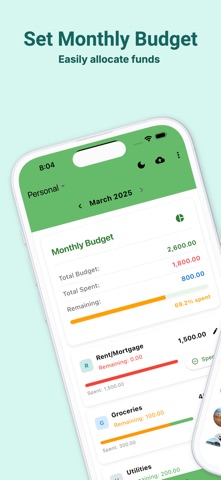
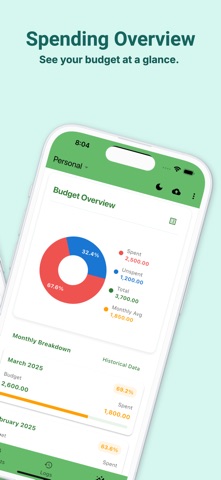


Released in April 2025 by solo developer Kimbert Bartiquel, Monthly Budget Finance Tracker is a free, lightweight entry in a crowded personal finance category. At 28 MB it installs quickly, and the core pitch is simple: set a monthly budget, assign spending to categories, and see where your money goes. With zero ratings on record, there is no community signal to draw on, so this review works entirely from what version 1.0 puts on the table.
Manual entry works, but lacks bank sync
The app keeps its scope deliberately narrow, focusing on monthly budget creation and manual expense logging rather than stacking on features most casual users never touch. That restraint has genuine appeal for someone who wants to punch in a grocery run without navigating a full financial platform. A category-allocation system gives first-time budgeters a logical starting point, and the 28 MB footprint suggests a lean, focused build. What the app does not appear to offer is equally telling: there is no evidence of bank connectivity, recurring transaction support, or data export, which means it functions as a manual ledger rather than a true financial management tool. For that narrow job, it may do the work adequately, but the absence of any user validation makes that assessment tentative at best.
Lean build suggests stable performance so far
Qualitative signals point to a modest but functional experience. The 28 MB install size is well below category norms for finance apps, suggesting the build avoids heavy frameworks or background sync processes that can slow things down. Version 1.0 released and was last updated on the same day, April 1, 2025, which means there has been no post-launch patch cycle to iron out bugs. No user reviews exist to surface crash reports, data-loss incidents, or UI friction points. For a solo-developer debut, the lean size is encouraging, but without a real-world track record, daily reliability remains genuinely unknown. Prospective users should treat the first weeks of use as a soft beta period and avoid storing financial data they cannot afford to re-enter manually.
Free to install, but monetization remains unclear
The app is free to download, which removes the immediate financial risk of trying it. However, the App Store listing flags the potential for in-app purchases without specifying what those purchases unlock or how they are priced. For a finance app, that ambiguity is a real transparency gap: users deserve to know upfront whether core features like data export, additional categories, or multi-month history sit behind a paywall. Free competitors such as the basic tiers of other budgeting apps offer comparable manual-entry functionality with established track records. At zero dollars to install, the cost-of-entry is low, but the unspecified monetization model introduces uncertainty that slightly undermines the otherwise risk-free proposition.
Financial data privacy depends on App Store label
Because this app involves financial data, privacy deserves careful attention before installation. The content rating of 4+ confirms no objectionable content flags, but it says nothing about data collection practices. The App Store privacy nutrition label for this app is the definitive source to consult: look specifically for what data is linked to your identity, whether usage data or financial information is shared with third parties, and what permissions the app requests at runtime. A manual-entry budgeting app with no bank sync theoretically needs fewer sensitive permissions than a connected finance tool, but that assumption should be verified against the actual privacy label rather than taken on faith from a version 1.0 release.
Interface likely simple, accessibility untested
The app's narrow feature set and beginner-oriented framing suggest a clean, uncluttered interface, and the small install size is consistent with a straightforward layout rather than a graphics-heavy design. Whether the app supports Dynamic Type, VoiceOver, or sufficient color contrast for low-vision users is not determinable from available data. Finance apps as a category vary widely in accessibility implementation, and solo developers working on a debut release do not always prioritize these features in version 1.0. Users who rely on assistive technologies should test the app carefully before committing to it as a regular tool, paying particular attention to whether category labels and input fields are properly tagged for screen readers.
No update history signals maintenance risk
This is the most significant open question surrounding the app. Version 1.0 was both released and last updated on April 1, 2025, meaning there is no update history whatsoever to assess. Solo developers building finance apps face real sustainability challenges: ongoing maintenance, iOS compatibility updates, and user support all require sustained effort over time. Without a second version, a response to user reviews, or any visible roadmap, there is no evidence yet of active stewardship. The app may thrive and receive regular updates, or it may stall at version 1.0 as many solo-developer debuts do. Revisiting the App Store listing after 60 to 90 days to check for updates and emerging user reviews would be a sensible step before relying on it long-term.
Pros
- Lightweight 28 MB install keeps the footprint small and setup fast
- Category-based budget allocation gives beginners a clear, low-friction structure
- Free to download, making the cost of trying it essentially zero
- Narrow feature scope means less learning curve for users new to budgeting
Cons
- Zero ratings and a same-day release and update date provide no stability or reliability signal
- In-app purchase model is unspecified, a notable transparency gap for a finance tool
- No evidence of bank sync, data export, or recurring transaction support limits usefulness beyond basic cash tracking
Related guides
Similar Finance apps


apptidal is independent and ad-supported. We earn no commission on installs and no company can pay for a better score. How we stay independent.