
Finance · iOS
Daily Budget Original
by Christopher Ruttinger
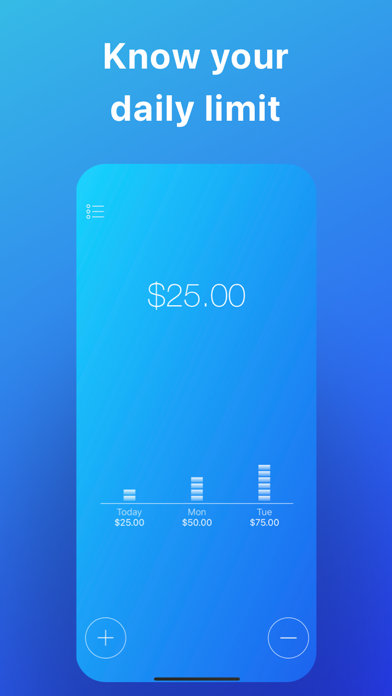
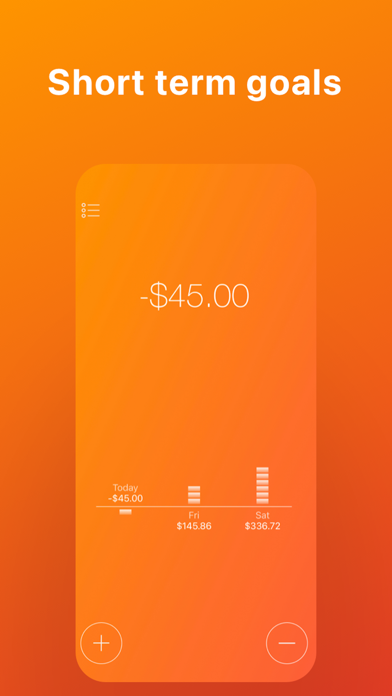
Built around one guiding idea since 2013, Daily Budget Original converts your income and upcoming expenses into a single number you can spend today. Developer Christopher Ruttinger has kept the app alive and updated well into 2026, a rare feat for an indie finance tool. The core mechanic is free, no subscription required, and no bank credentials are ever requested. At 210 MB the install is heavier than the concept suggests, but the simplicity-first approach resonates, reflected in a 4.71 rating across roughly 5,000 reviews.
Daily spending ceiling simplifies month-level budgeting
The app's entire philosophy collapses your finances into one figure: how much you can spend right now, today. You enter income, flag upcoming large expenses, and the app divides the remainder across your remaining days. That sounds almost too simple, but for people who find month-level budgeting too abstract to act on, the daily number creates exactly the right kind of friction. No bank connection is required at any point, which means your credentials never leave your device. Saving targets and basic expense categories round out the core experience. The mechanic is well-executed and genuinely useful for its intended audience.
Large install size belies narrow feature set
Daily performance is hard to benchmark precisely, but several real signals paint a reasonable picture. The 210 MB install size is notably large for an app whose feature set is intentionally narrow, suggesting asset overhead that could have been trimmed. That said, the app has accumulated 5,000 ratings over more than a decade, and a 4.71 average at that volume implies consistent stability rather than a buggy experience. Updates shipped as recently as July 2026 indicate the developer is actively addressing issues. The manual-entry model means performance is less about processing speed and more about how frictionless logging feels, and the straightforward interface keeps that friction low.
Free tier sufficient for casual users only
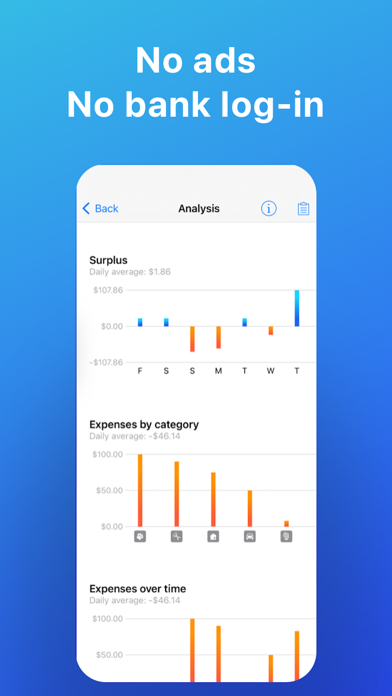
The free tier is genuinely functional, covering daily budget calculation, basic categories, saving targets, and backup. For a casual user who simply wants a daily spending ceiling, that may be enough indefinitely. The cost equation shifts once you want more: custom categories, PIN protection, data encryption, CSV export, analysis graphs, and multi-user Dropbox sync all sit behind in-app purchases. Ads also run throughout the free experience, which undercuts the clean, focused aesthetic the app otherwise projects. Anyone managing a household budget or wanting to audit spending patterns will reach the paywall fairly quickly, making an early upgrade worth considering.
Manual entry eliminates need for bank credentials
The no-bank-connection stance is the app's strongest privacy credential. Because all data entry is manual, no financial credentials are transmitted anywhere by default. Data remains on-device unless you actively choose to push an encrypted backup to the cloud yourself. For the full picture of what data is collected, permissions requested, and third-party tracking involved, the App Store privacy nutrition label for this app is the authoritative source and worth reviewing before installing. The free tier includes ads, which typically involve some form of ad-network data sharing, so privacy-conscious users may want to factor an upgrade into their decision.
Prominent daily number prioritizes quick check-ins
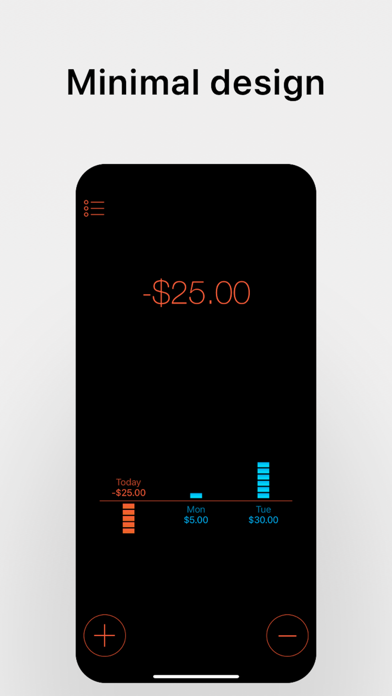
The design philosophy prioritizes legibility over feature density, and that choice serves the core use case well. The daily number is prominent and immediately readable, which matters when the whole point is a quick daily check-in rather than a deep analytical session. The interface is clean enough that new users can orient themselves without a tutorial. Formal accessibility testing results are not something we can verify independently, but the large-text-friendly numeric display and minimal navigation depth are positive structural signals. Users with specific accessibility needs should test the app directly, as iOS VoiceOver and Dynamic Type support can vary across indie finance apps.
Over 13 years of continuous independent development
Longevity is one of this app's most compelling selling points. Released in May 2013 and updated as recently as July 2026, Daily Budget Original has been in continuous development for over 13 years under the same independent developer. That kind of sustained commitment is uncommon in the App Store, particularly for a free-tier finance app without a large company behind it. The 5,000-review base built over that period suggests a stable, returning user community rather than a spike-and-fade download pattern. For users worried about an app disappearing or going unmaintained, this track record offers genuine reassurance.
Pros
- No bank account connection required, keeping financial credentials entirely off any server
- Core daily budget mechanic is fully functional on the free tier with no time limit
- Over 13 years of continuous updates from a single independent developer, including a 2026 release
- On-device data storage by default, with an opt-in encrypted cloud backup for sync
Cons
- 210 MB install size is disproportionately large for an app with a deliberately narrow feature set
- Ads run throughout the free version, undermining the clean and focused experience
- Key features including CSV export, analysis graphs, and multi-user sync all require paid upgrades
Related guides
Similar Finance apps


apptidal is independent and ad-supported. We earn no commission on installs and no company can pay for a better score. How we stay independent.