
Finance · iOS
SpendlyAI Budget Money Tracker
by Juan Andres Penaloza Torres

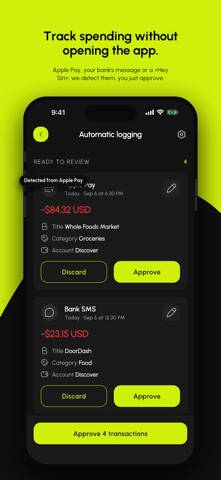


SpendlyAI Budget Money Tracker is a solo-developer finance app that bundles AI-assisted transaction entry, receipt scanning, voice input, and a monthly budget planner into a 72 MB package. Released in late 2025 and already updated to version 2.2.3 by mid-2026, it shows active development momentum. With zero ratings on record, however, this assessment rests entirely on the feature set the app ships with rather than any community validation.
Multiple entry methods target real friction points
The core pitch of SpendlyAI is its variety of transaction-entry methods. Receipt photo scanning, voice notes, and chat-style text commands all feed into the expense log, bypassing the tedious form-filling that causes most people to abandon budgeting apps after week one. Beyond entry methods, the app covers a broader scope than many competitors at this price point, including a monthly budget planner, income tracking, and a debt payoff planner. Whether the AI parsing behind these features is reliably accurate in practice remains the critical unknown, since no user reviews exist to validate it. The architecture at least targets the right friction points, and the feature breadth is genuinely impressive for a solo-developer project.
Moderate install size with active development pace
Qualitative performance signals are mixed. At 72 MB, the install size is moderate but not alarming for an app that incorporates AI processing and receipt image handling. The update cadence is a positive sign: reaching version 2.2.3 within roughly seven months of release suggests the developer is actively resolving issues rather than letting the app stagnate. That said, AI-driven features like receipt scanning and voice parsing are computationally demanding, and without benchmark data or user reports, it is impossible to assess how consistently they perform across different device generations or lighting conditions. Users on older iPhones should set expectations accordingly and treat first-month use as a calibration period.
Free download masks unclear in-app purchase structure
The free entry point removes any financial barrier to trying SpendlyAI, which is the right call for an app with no established reputation. The concern is what comes after download. In-app purchases are listed but their structure, whether that means a subscription, one-time unlocks, or feature gating, is not clearly defined in available information. For a finance app that will hold sensitive budget and transaction data, ambiguous monetization terms are a meaningful red flag. Prospective users should review the full in-app purchase disclosures on the App Store listing before committing any real financial data to the platform.
Privacy claims require App Store label verification
A finance app that also handles receipt photos and voice input touches several sensitive data categories: spending history, camera access, and microphone access at minimum. We cannot independently verify what data is collected, retained, or shared, and we will not speculate. The authoritative source is the App Store privacy nutrition label on the SpendlyAI product page, which Apple requires developers to self-report. Prospective users should check that label carefully before installing, paying particular attention to whether financial data or usage data is linked to identity or shared with third parties. Single-developer projects also carry an inherent question about server infrastructure and what happens to stored data if development ceases.
Modern interface design needs accessibility confirmation
No independent accessibility audit is available for SpendlyAI, and we will not fabricate results. What can be observed is that the app targets a modern interaction model, conversational text input and voice commands, which can be friendlier for users who find traditional form-based interfaces cumbersome. Whether Dynamic Type scaling, VoiceOver compatibility, and sufficient color contrast are implemented correctly is something users with accessibility needs should verify during a free trial period. The content rating of 4-plus suggests no content concerns, and the interface paradigm at least signals design ambition beyond a basic spreadsheet clone.
Seven-month update history suggests active maintenance
The update history is the strongest argument in SpendlyAI's favor right now. Moving from initial release to version 2.2.3 within approximately seven months indicates the developer is engaged and shipping fixes or improvements at a meaningful cadence. That is a better signal than many solo-developer finance apps provide. The sustainability question remains real, though. A single developer maintaining AI features, server infrastructure, and ongoing iOS compatibility updates is a significant ongoing commitment. Users should monitor whether the update pace holds through 2026 and beyond before migrating large amounts of financial history into the platform.
Pros
- Multiple transaction entry methods including receipt scanning, voice input, and chat commands meaningfully reduce manual logging friction
- Active update cadence reaching version 2.2.3 within roughly seven months of release signals genuine developer engagement
- Feature scope exceeds basic trackers by including debt payoff planning and income tracking alongside core budgeting
- Free entry point lets users evaluate AI accuracy and interface quality without any upfront financial commitment
Cons
- Zero user ratings provide no independent validation of AI parsing accuracy or overall reliability
- In-app purchase structure is present but not clearly defined, creating uncertainty about long-term costs
- Single-developer project raises legitimate questions about long-term data continuity and server upkeep
Related guides
Similar Finance apps


apptidal is independent and ad-supported. We earn no commission on installs and no company can pay for a better score. How we stay independent.