
Tools · iOS
Climb Up: Timer & Productivity
by Bohdan Brinzov
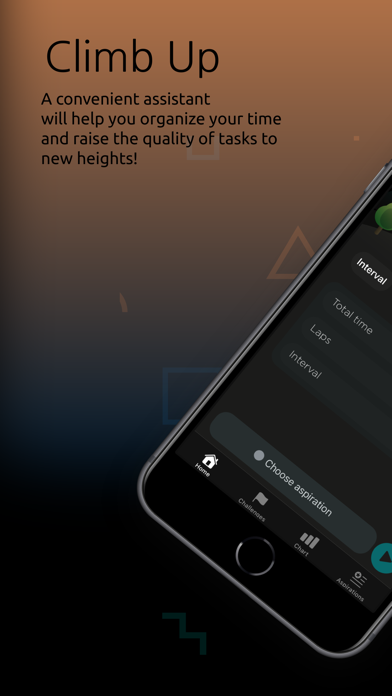
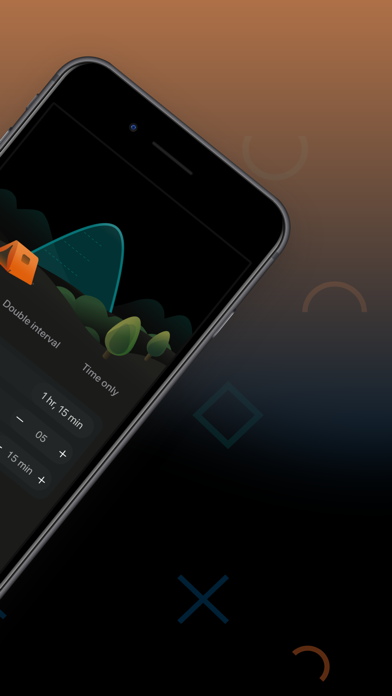


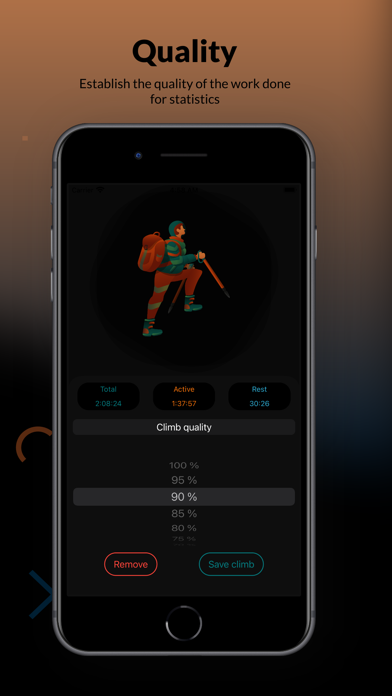
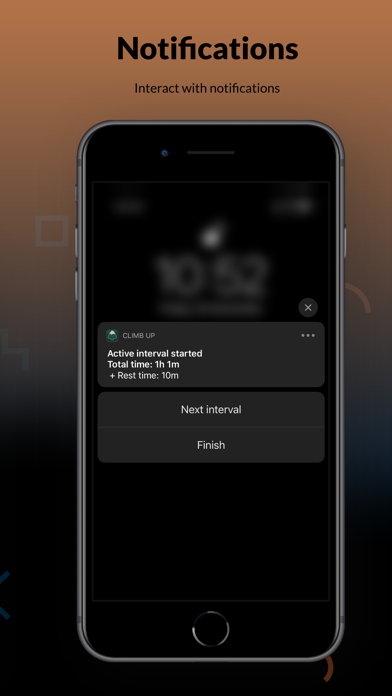
Climb Up is a solo-developed iOS productivity timer from Bohdan Brinzov, released in January 2021 and still receiving updates into late 2025. At just 12 MB, it stays lean while delivering three distinct timer modes, post-session quality ratings, per-task charts, and subtask splitting. Free to download with no ratings on record, it remains genuinely uncharted territory, a capable concept that has simply not yet found its audience.
Three timer modes handle different work styles
The core pitch is structured work-rest cycling with built-in reflection. Three timer modes handle different planning styles: Interval mode automatically nudges you between work and rest, Double Interval lets you lock in fixed durations for both states with the option to skip ahead, and Only Time sets a hard endpoint while leaving state transitions entirely to you. That range is a sensible design decision, covering both rigid schedulers and people who prefer loose guardrails. After each session, the app prompts a quality rating, feeding data into per-task charts and subtask-level statistics. An achievements layer adds light motivation. The concept is well-structured for a free, one-developer tool, though real-world reliability remains unverified with zero public ratings to draw from.
Minimal footprint suggests stable daily performance
Concrete performance data is unavailable without user reviews or independent benchmarks, so qualitative signals have to carry the assessment. On that front, the picture is reasonably encouraging. A 12 MB install footprint is well below category norms for productivity apps, suggesting minimal background overhead and fast cold-launch times on modern iPhones. The app carries a 4+ content rating and imposes no complex rendering demands, both factors that point toward stable, low-resource operation. The December 2025 update date confirms the developer is actively addressing issues rather than letting the codebase stagnate. Still, anyone considering Climb Up should treat their first few weeks as a genuine test period, because no community data exists to confirm smooth performance across iOS versions or device generations.
Free download masks uncertain premium feature boundaries
The app is free to download, which removes the financial barrier entirely for curious users. That said, the existing review data does not specify whether in-app purchases unlock premium features, and that ambiguity is a real concern. Charts, subtask splitting, and multi-mode timers are the headline features; if any of them sit behind a paywall, the value calculation shifts considerably. At the free tier, Climb Up competes with well-established alternatives like Forest, Toggl Track, and the built-in iOS Focus modes, all of which carry thousands of verified reviews. For users willing to accept that uncertainty and invest time in an unproven tool, the zero upfront cost makes experimentation low-risk. For anyone who needs a dependable daily driver from day one, the unknowns around pricing and reliability counsel caution.
Check App Store privacy label before installing
No specific privacy findings can be stated here without fabricating data. The right approach is to open the App Store listing and scroll to the Privacy section before installing. Apple requires developers to self-report data collection practices under categories such as usage data, identifiers, and diagnostics. For a solo-developed, free productivity timer, it is reasonable to expect some analytics collection, but the actual label may vary. Check specifically whether any data is linked to your identity or shared with third parties. Because the app is free and ad-supported models are common in this category, advertising-related data collection is worth scrutinising in particular. The App Store privacy label is the authoritative source and takes only seconds to review.
Straightforward interface likely supports basic accessibility
The feature set suggests a clean, task-focused interface rather than a visually complex one, which generally correlates with better accessibility outcomes. Three clearly delineated timer modes and a post-session rating prompt are discrete, navigable interactions that should work reasonably well with VoiceOver if the developer has applied standard UIKit accessibility labels. However, no independent accessibility audit is available, and with zero user reviews there is no community feedback confirming or denying screen-reader support. The 4+ content rating and lean 12 MB size both point to a straightforward UI without heavy animation or custom rendering that might complicate assistive technology. Users who rely on VoiceOver or Dynamic Type should test the app briefly before committing to it as a daily tool.
Four years of updates show developer commitment
The update history is one of Climb Up's clearest strengths. Launching in January 2021 and reaching a December 2025 update date represents over four years of continued development from a solo developer, which is meaningfully better than the abandoned-app norm in the Tools category. Version 1.0.2 after that span does suggest a conservative, incremental approach to feature additions rather than rapid iteration, and some users may find the pace frustratingly slow. On the other hand, stability-focused updates are not inherently a weakness for a utility app. The developer appears committed to keeping the app functional on current iOS releases, and that consistency matters more for a timer tool than a constant stream of new features.
Pros
- Three distinct timer modes accommodate both rigid schedulers and flexible working styles
- Post-session quality rating and per-task charts address a gap most simple timers ignore entirely
- Minimal 12 MB footprint keeps storage and resource impact low on any iPhone
- Actively maintained with a December 2025 update confirming ongoing solo-developer commitment
Cons
- Zero user ratings leave real-world reliability and stability completely unverified
- In-app purchase scope is unspecified, creating genuine uncertainty about the true cost of full functionality
- Version 1.0.2 after four-plus years signals slow feature development relative to well-resourced competitors
Related guides
Similar Tools apps


apptidal is independent and ad-supported. We earn no commission on installs and no company can pay for a better score. How we stay independent.