
Tools · iOS
Do Habits: Get It Done
by Kodeon, Inc.


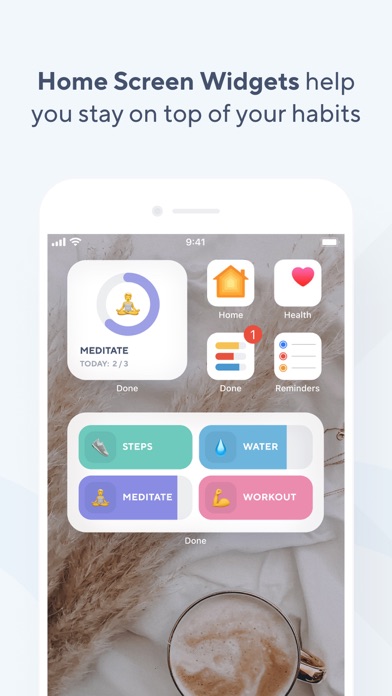


Released in 2016 and still pulling a 4.04 rating across 17,000 reviews, Do Habits from Kodeon has demonstrated real staying power. The core idea is simple but genuinely differentiated: assign a numeric target to any habit and log progress multiple times within a day, week, month, or year. That flexibility separates it from the vast majority of trackers that only offer a single daily checkbox.
Numeric targets work where binary tracking fails
Most habit trackers reduce every goal to a binary done-or-not state, which breaks down the moment you want to log eight glasses of water, four gym sessions a week, or a monthly savings milestone. Do Habits sidesteps that limitation by letting users assign a real numeric target and increment toward it as many times as needed within the chosen period. Goal tiers span daily, weekly, monthly, and yearly timeframes, giving the app enough range to handle both short-term sprints and multi-month commitments. Streak tracking across consecutive periods adds a light accountability layer without tipping into the gamified pressure that can make other trackers feel exhausting. For its defined purpose, the app does the job well.
Heavy install size belies stable performance
At 172 MB, the install footprint is noticeably heavy for an app whose core function is essentially a list of counters. That size does not reflect poorly on runtime stability, since a 4.04 average across 17,000 ratings suggests the experience is broadly smooth, but it is worth flagging for users on storage-constrained devices. The app has received consistent updates over nearly a decade, with the most recent version landing in July 2026, which signals active maintenance rather than passive neglect. Qualitatively, a well-maintained app in a lightweight category with a strong rating base tends to perform reliably, though users should check recent App Store reviews for any regression notes tied to the latest iOS release.
Free tier caps habits at three
Do Habits is free to download, which makes the initial barrier to entry low. The friction arrives quickly, however, because the free tier caps active habits at three. Anyone serious about behavior change typically manages more than three goals simultaneously, so the paywall is less a distant upgrade option and more an early inevitability. Kodeon does not surface premium pricing clearly in store materials, which makes it harder to evaluate value before committing. Casual users who genuinely only need one or two habits can extract real, lasting value at no cost. For everyone else, the honest advice is to look up the current subscription or one-time purchase price before investing time in setup.
Check App Store privacy label directly
No specific privacy findings are presented here as fact, because doing so without direct measurement would be misleading. What we can say is that habit data, including frequency, timing, and goal types, is personal behavioral information worth understanding before handing it to any third party. Apple requires developers to disclose data collection practices through the App Store privacy nutrition label, and that label is the most reliable place to check what Do Habits collects, whether it links data to your identity, and whether it shares anything with third parties. We recommend reviewing that label directly on the App Store listing before downloading.
Clean design needs accessibility verification
The app's visual approach appears functional and clean based on its store presence, and a 4+ content rating confirms it is appropriate for all ages. Streak counters and numeric progress displays are inherently readable formats, which tends to support basic accessibility. That said, the store listing copy reportedly cuts off mid-sentence in places, a small but telling sign of inconsistent attention to presentation polish. For users who rely on VoiceOver or Dynamic Type, Apple's standard UIKit components generally provide a reasonable baseline, but the app has not been independently verified for full accessibility compliance. Checking the app's own accessibility settings and testing VoiceOver behavior before committing is the safest approach.
Nearly a decade of consistent updates
By the standards of the App Store, Do Habits has an unusually strong maintenance record. Kodeon released the app in May 2016 and has continued updating it for nearly a decade, with version 4.1.1 arriving in July 2026. That kind of longevity in a category littered with abandoned projects is a meaningful signal of developer commitment. A rating count of 17,000 also suggests an engaged user base large enough to surface bugs and prompt fixes over time. There is no indication this is abandonware, and the version number implies iterative refinement rather than stagnation. Users can reasonably expect continued iOS compatibility updates going forward.
Pros
- Supports multiple log entries per period rather than a single daily checkmark, making it genuinely useful for countable goals like water intake or exercise sets
- Goal tracking spans daily, weekly, monthly, and yearly timeframes, covering both short sprints and long-term targets in one app
- Streak tracking adds low-pressure accountability without the aggressive gamification common in competing apps
- Nearly a decade of active development, with a July 2026 update confirming ongoing maintenance on a 2016 release
Cons
- Free tier limits users to three habits, pushing most people toward a purchase faster than the free label implies
- At 172 MB the download size is disproportionately large for an app whose core function is a set of counters and lists
- Premium pricing is not disclosed upfront in store materials, making it difficult to assess full cost before investing time in setup
Related guides
Similar Tools apps


apptidal is independent and ad-supported. We earn no commission on installs and no company can pay for a better score. How we stay independent.