
Finance · iOS
Expense Tracker & Budgeting
by Amit Mohan

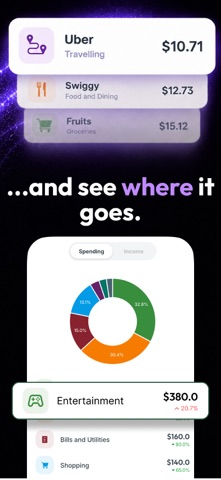
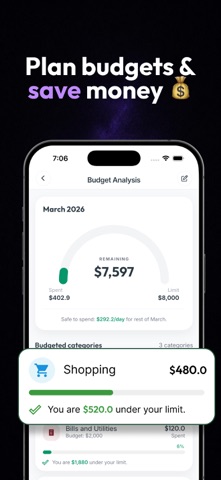


Released in late 2021 and kept current through mid-2026, this free iOS finance app from developer Amit Mohan stores everything on-device and encrypted rather than syncing to any cloud. Category budgets, overspend alerts, and spending analytics cover the core loop cleanly. At 131 MB and 47 ratings averaging 4.3 stars, it occupies a quiet corner of a crowded category, earning measured praise from users who value simplicity and data control over connected features.
Local-first design prioritizes privacy over sync
The app centers on manual expense entry organized into customizable categories, each paired with a budget ceiling and proactive overspend alerts. Spending analytics give a visual overview of where money is going across a chosen period. What separates it from most rivals is the deliberate absence of cloud sync: no account creation, no server dependency, and no risk of a startup shutdown wiping your history. User feedback consistently calls the interface intuitive and uncluttered, and the confirmed absence of ads reinforces that impression. The core loop works well for solo tracking, though users who want bank feeds, multi-device sync, or collaborative household budgeting will find the feature set genuinely limited rather than just minimal.
Responsive performance hampered by unclear file size
At 131 MB, the install footprint is heavier than you might expect from a local-only tracker with no streaming content, though it is not unusual for apps that bundle charting libraries and encryption frameworks. Because all data lives on the device, load times are not dependent on network conditions, which typically means snappy navigation even on older hardware. Version 3.21.4, updated in July 2026, suggests the developer is still actively iterating, and a healthy version number after roughly four and a half years implies accumulated refinement. That said, with only 47 public ratings, the pool of real-world performance signals is narrow, so qualitative impressions from the App Store reviews carry more weight here than statistical averages.
Free core with undisclosed premium features
The app is free to download, and the core tracking and budgeting features appear accessible without a paywall. In-app purchases are listed on the App Store page, but their exact scope, whether they unlock cosmetic themes, export features, or advanced analytics, is not clearly communicated in available materials. That ambiguity is worth resolving before you build a habit around the app. Compared with subscription-based rivals that charge anywhere from a few dollars monthly to premium annual fees, a free or low-cost local tracker has obvious appeal. The value proposition holds as long as the features you need are not gated behind undisclosed purchases.
Encryption and offline storage protect financial data
The local-first architecture is the strongest privacy signal available: no account registration means no email address or personal profile is transmitted to a developer server. On-device encryption adds a layer of protection if your device is lost or accessed without authorization. For the full picture, check the App Store privacy label on the app's product page, which is the authoritative source for what data types are collected, linked to your identity, or used for tracking. Given the offline design, the label should be relatively sparse, but verifying that directly is always the right move before entering detailed financial information into any app.
Intuitive interface lacks formal accessibility verification
User reviews point to a clean, uncluttered interface, and the absence of advertising removes a common source of visual noise that plagues free finance apps. The 4+ content rating confirms no mature content concerns. Observable design choices, such as category-based organization and alert-driven budgeting, follow established finance app conventions, which reduces the learning curve. Formal accessibility features like Dynamic Type support, VoiceOver compatibility, and sufficient color contrast are not verifiable from available data alone. Users who rely on assistive technologies should test the app during any free trial period or check recent App Store reviews specifically mentioning accessibility before committing.
Solo developer maintains active updates with risk
A July 2026 update on an app first released in December 2021 is a genuinely positive signal, and version 3.21.4 indicates sustained development rather than a project left to stagnate. The concern is structural rather than behavioral: a solo developer, however diligent, carries inherent continuity risk. There is no team to absorb illness, burnout, or shifting priorities. With only 47 ratings after more than four years, the user community is small, which limits external pressure to keep the app current and reduces the likelihood of community-driven bug reports surfacing quickly. The maintenance record so far is encouraging, but the long-term outlook carries more uncertainty than it would for a funded team or a larger independent studio.
Pros
- All financial data stored locally and encrypted, with no cloud account or server dependency required
- No ads reported by users, keeping the interface genuinely clean and distraction-free
- Category budgets paired with proactive overspend alerts cover the essential solo-tracking loop
- Consistently updated since 2021, with a version 3.21.4 release as recent as July 2026
Cons
- Only 47 ratings after more than four years signals a very small user base, raising questions about long-term developer support
- In-app purchase scope is not clearly disclosed, creating uncertainty about which features may eventually require payment
- No cloud sync means migrating to a new device requires manual data handling, with no automatic backup safety net
Related guides
Similar Finance apps


apptidal is independent and ad-supported. We earn no commission on installs and no company can pay for a better score. How we stay independent.