
Tools · iOS
Habit Tracker
by InnerGrow

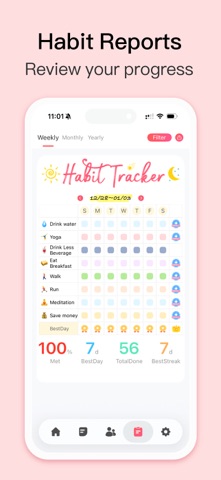
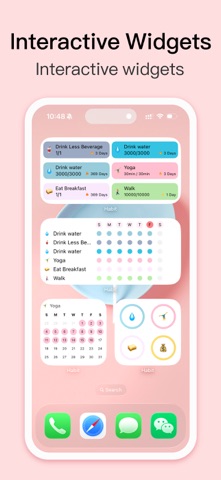


Behind a name so generic it nearly disappears in search results sits one of the App Store's more complete habit tools, carrying 144K ratings at 4.79 stars and a claimed 15 million users. InnerGrow goes well past simple checkboxes, offering unit-based logging, Apple Health sync, mood journaling, HRV stress monitoring, and group habits. The free tier covers the basics, though the richest analytics lean on a subscription.
Unit tracking and Apple Health sync work well
The core differentiator is unit-based tracking. Logging eight glasses of water or thirty minutes of reading instead of a binary tick gives streaks genuine texture and makes progress feel measurable rather than arbitrary. Apple Health sync pulls in steps, sleep, and exercise automatically, eliminating double-entry for users already invested in that ecosystem. Mood logging and an HRV-based stress monitor push the app toward a lightweight wellness journal, and group habits let friends or family pursue the same routine together, adding a social accountability layer that most rivals skip entirely. For the scope it covers, the execution is largely coherent.
Heavy install size slows daily navigation
At 322 MB, this is a notably heavy install for a habit tracker, a category where many competitors sit under 50 MB. That footprint suggests rich on-device assets and local data storage, which can benefit offline reliability, though it does ask more of device storage than the genre typically demands. The app has been updated as recently as July 2026, indicating active optimization work. With 144K ratings at 4.79, sustained user satisfaction at that volume is a credible signal of stable, consistent daily performance. Qualitatively, the feature density means navigating reminders, analytics, and mood logs can feel slower than a leaner alternative on a quick morning check-in.
Free tier covers basics, premium unlocks analytics
The app is free to download, and the free tier is genuinely functional for building a modest routine. The friction arrives when users want unlimited habit slots, detailed long-term analytics, or advanced reporting, all of which sit behind a subscription. That paywall structure is standard for the category, and the breadth of features on offer makes the premium tier easier to justify than in thinner competitors. Casual users who need only a handful of habits and basic streak tracking may never need to upgrade, which is a reasonable value proposition for a wide audience.
Apple Health permissions require careful review
Because Habit Tracker connects to Apple Health, it requests access to sensitive wellness data including sleep, heart rate, and activity metrics. Users should review exactly which Health categories they grant during setup and limit permissions to what they actively use. The definitive source for understanding what data is collected, linked to identity, and used for tracking is the App Store privacy nutrition label on the app's product page. We recommend reading it before connecting Health data. The content rating of 4+ suggests no overtly sensitive content, but wellness data always warrants careful permission management.
Dense interface suits power users over newcomers
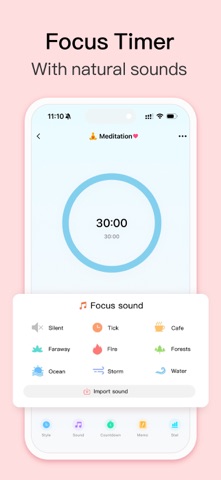
The interface leans toward information density over minimalism, which suits power users but can feel cluttered for newcomers still learning the layout. Visual design is polished enough to feel premium, with customizable elements like sounds and reminders adding personalization. Accessibility support for features like Dynamic Type and VoiceOver should be verified directly on device, as InnerGrow has not prominently publicized specific accessibility commitments. The sheer number of panels and settings means the learning curve is steeper than category norms, and first-time users may spend meaningful time configuring before the app feels natural.
Seven years of updates signal active support
Maintenance signals here are strong. The app launched in January 2019 and reached version 2.14.18 as of a July 2026 update, reflecting years of sustained iteration rather than an abandoned project. The version number alone suggests hundreds of incremental releases. A rating count of 144K is difficult to accumulate without consistent user growth, and a 4.79 average across that volume indicates the developer has been responsive to quality issues over time. For users concerned about long-term reliability, this track record compares favorably with much of the habit-tracking category.
Pros
- Unit-based tracking adds genuine nuance beyond simple pass-or-fail checkmarks
- Deep Apple Health sync eliminates double-entry for steps, sleep, and exercise
- Group habits provide a social accountability layer most competing apps skip
- Mood journaling and HRV stress monitoring extend it into lightweight wellness territory
Cons
- 322 MB install size is disproportionately large for a habit-tracking app
- Feature sprawl across analytics, mood logs, and reminders can overwhelm users seeking simplicity
- Unlimited habit slots and the richest reporting are locked behind a subscription paywall
Related guides
Similar Tools apps


apptidal is independent and ad-supported. We earn no commission on installs and no company can pay for a better score. How we stay independent.