
Finance · iOS
Money Monitor: Expense Tracker
by 倩 赵
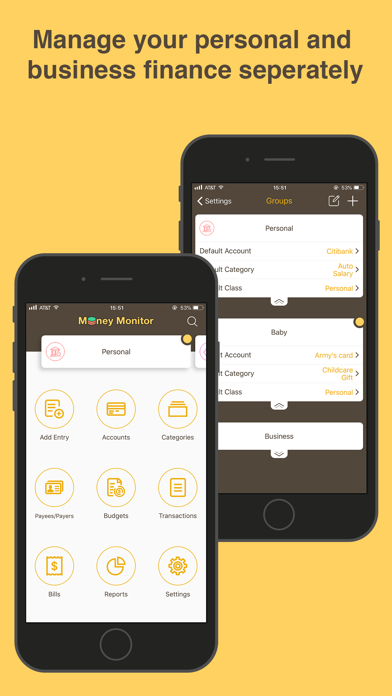
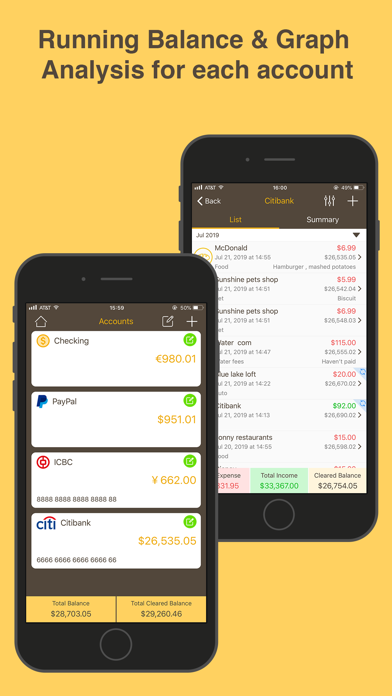
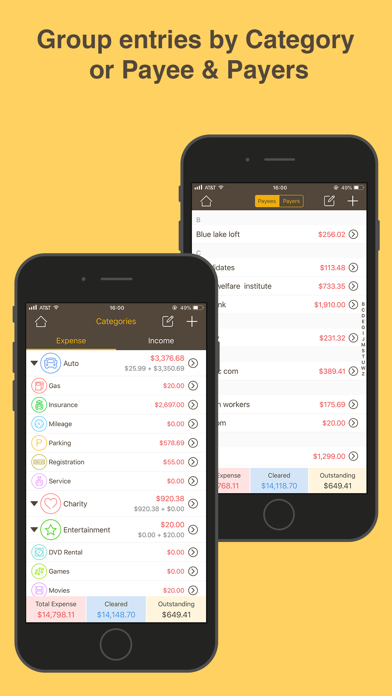
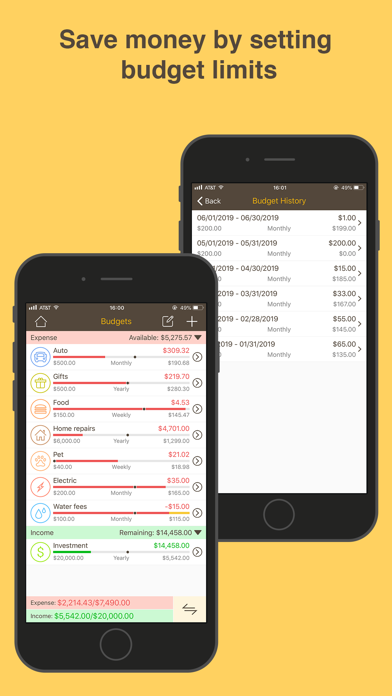
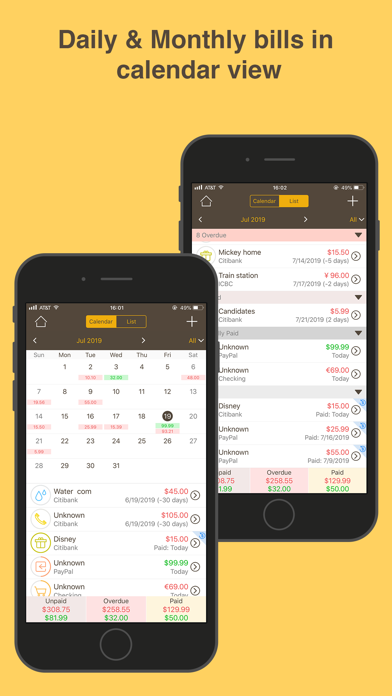
Released in 2012 and now at version 9.0, Money Monitor covers the personal finance essentials: transaction logging, multiple account types, budgets, bills, and payee tracking, all in a compact 56 MB install. A 4.02 store rating across 357 reviews signals a modestly satisfied but not enthusiastic user base, which feels accurate for an app that is capable yet unspectacular. Free to download, with in-app purchases whose scope remains unclear.
Comprehensive transaction logging with real depth
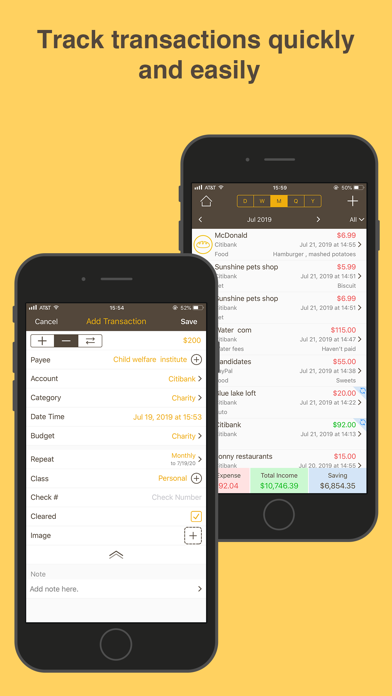
The breadth of trackable items is the genuine selling point. Users can log income, expenses, and transfers, attach recurring schedules, tag a payee, link a budget category, and append a receipt photo to any single transaction. Eight built-in account types plus a custom option means most real-world setups, checking, cash, credit, and beyond, fit without awkward workarounds. A cleared or uncleared transaction flag adds meaningful precision for anyone who reconciles against bank statements manually. For a solo developer project, the structural depth is impressive, covering more ground than many polished competitors in the same free-to-download tier.
Lightweight native build on current iOS
At 56 MB, Money Monitor sits well within the lightweight range for a finance app, suggesting a native build without heavy web-view overhead. Version 9.0, pushed in December 2025, indicates the codebase is actively compiled against current iOS frameworks rather than coasting on legacy code, which generally correlates with stable performance on modern devices. That said, 357 ratings accumulated over more than 13 years is a thin volume, so widespread stress-testing by a large community has not occurred. Users should expect a functional but potentially rough-edged experience in edge cases, particularly around data import or export workflows.
Free download obscures unclear paid features
The app is free to download, which lowers the barrier to trying it. The complication is that in-app purchases exist and their scope is not clearly disclosed in the store listing. Without knowing whether core features like budget creation, bill tracking, or data export sit behind a paywall, committing time to manual data entry carries real risk. Competing trackers such as Wallet or Spendee make their free versus premium tiers explicit upfront. Until Money Monitor matches that transparency, prospective users should probe the purchase prompts early in their trial rather than discovering limits after significant setup investment.
Manual entry limits sensitive permission exposure
Because Money Monitor appears to operate on manual entry rather than bank-linked syncing, it likely requests fewer sensitive permissions than aggregator-style apps. That is a meaningful privacy advantage for users wary of sharing banking credentials with third parties. However, we cannot confirm the specific data types collected, shared, or used for tracking without reviewing the App Store privacy nutrition label directly on the product page. Readers should check that label before installing, paying particular attention to whether any usage data or identifiers are linked to the user's identity for advertising or analytics purposes.
Interface maturity unclear without hands-on testing
A version 9.0 designation after 13 years implies multiple interface overhauls, though the store description reportedly cuts off mid-sentence, which hints at inconsistent editorial care in the presentation layer. The app carries a 4+ content rating, meaning no objectionable material concerns. Accessibility specifics, such as VoiceOver compatibility or Dynamic Type support, are not verifiable without hands-on testing, but finance apps with dense transaction lists can be challenging for low-vision users if row contrast and font scaling are not implemented carefully. Users with accessibility needs should test the free download before committing to any purchase.
Solo developer shipping regular updates since 2012
This is where Money Monitor earns genuine credit. A December 2025 update to version 9.0 confirms the developer is still shipping code, a meaningful distinction from the many finance apps that stagnate after a few years. The original 2012 release date means the app has survived multiple major iOS transitions, which requires sustained effort from a solo developer. The concern is single-developer dependency: if the developer steps away, support and updates could cease without notice. For now, the maintenance record is encouraging, and the version cadence suggests real ongoing investment rather than a dormant listing kept alive for passive downloads.
Pros
- Covers transactions, accounts, budgets, bills, and payees in a single 56 MB install
- Eight built-in account types plus a custom option accommodate most real-world financial setups
- Cleared or uncleared transaction flag adds precision for manual bank reconciliation
- Version 9.0 shipped December 2025, confirming active maintenance across 13-plus years
Cons
- In-app purchase scope is undisclosed, creating real uncertainty about which features require payment
- Only 357 ratings after more than a decade on the store signals limited mainstream adoption
- Single-developer origin means long-term support continuity depends entirely on one person
Related guides
Similar Finance apps


apptidal is independent and ad-supported. We earn no commission on installs and no company can pay for a better score. How we stay independent.