
Finance · iOS
MonoBoost Cancel Subscriptions
by Mnboost Corp

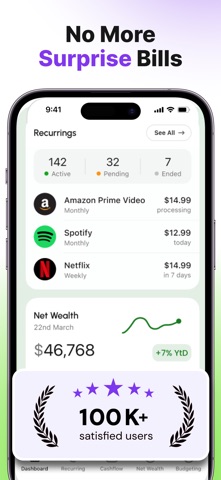
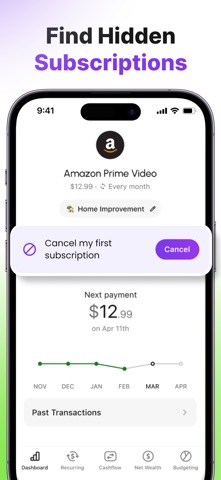
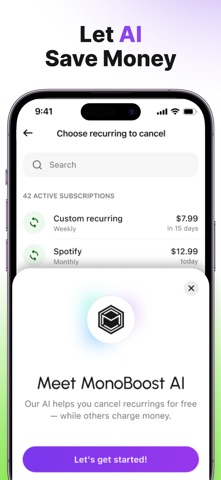
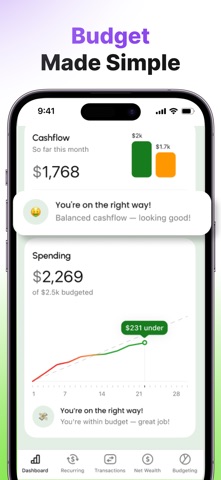
Launched in January 2025, MonoBoost Cancel Subscriptions targets the very common problem of subscription sprawl on iOS. At 75 MB it installs quickly, and a 4.34 rating drawn from roughly 5,000 reviews signals real user satisfaction. The app consolidates renewal dates, costs, and service names in one place, then routes cancellations directly into the correct iOS system screen, trimming the steps you would otherwise spend hunting through Settings.
Consolidates Apple subscriptions with limited scope
The core promise is a single consolidated view of active subscriptions, pulling renewal dates, pricing, and service names into one readable screen so users stop cross-referencing bank statements with email receipts. Canceling an Apple subscription is handled by routing you into the correct iOS system panel, which genuinely shortens the journey even though the app is not performing any technical feat unavailable in native Settings. The interface, based on what has shipped through version 1.3.95, appears clean and scannable. For the specific audience of casual iPhone users who find Apple's own Subscriptions screen confusing, MonoBoost does its narrow job reasonably well. It does not, however, reach beyond Apple's own ecosystem to surface third-party subscriptions billed outside the App Store, which is a meaningful ceiling on its usefulness.
Lightweight performance with active developer support
At 75 MB the install footprint is modest for a Finance app, and there are no large media assets or complex rendering pipelines that would typically cause slowdowns. The app has received updates as recently as July 2026, suggesting the developer is actively patching and refining the experience rather than abandoning it post-launch. A 4.34 rating across 5,000 reviews is a meaningful signal of day-to-day stability; apps with persistent crashes or data errors tend to see that score erode quickly at scale. Because the app relies on Apple's own subscription data rather than live bank feeds, there is no background sync engine to drain battery or stall on poor connections. Daily use should feel lightweight and consistent for most users.
Free tier undercuts paid subscription tracking pitch
The app is free to download, but in-app purchases are listed, and that creates an ironic tension at the heart of the product. An app whose entire pitch is saving you money on subscriptions asking you to pay a recurring fee to track recurring fees is a friction point worth weighing carefully before committing. The free tier may surface enough information to be useful for light users, but anyone who wants the full feature set should check exactly what is gated before downloading. Power users who already review subscriptions through Apple's native Settings screen or through their bank's transaction history may find the free tier redundant and the paid tier hard to justify.
Narrow data access but verify privacy label
Because MonoBoost reads Apple subscription data rather than connecting directly to bank accounts or credit cards, its data access footprint is narrower than that of full-fledged personal finance apps. That said, the specifics of what is collected, how it is stored, and whether it is shared with third parties should be verified in the App Store privacy label before installing. Apple requires developers to self-report data practices in that label, making it the most reliable source available. Pay particular attention to whether usage data or identifiers are linked to your profile, and check whether any analytics SDKs are bundled inside the 75 MB package.
Simple list layout suited to text scaling
The app's content rating of 4 plus indicates no mature content concerns, and the single-screen subscription overview concept is inherently simple to navigate. A clean, list-based layout with clear renewal dates and amounts is well suited to Dynamic Type scaling, which benefits users who rely on larger text. Whether VoiceOver labels are properly implemented on interactive elements is worth testing firsthand, as subscription-management apps in this category vary widely in screen-reader support. The iOS-only nature of the product means design decisions are tuned specifically for Apple's Human Interface Guidelines, which generally works in favor of accessibility compliance compared to cross-platform frameworks.
Consistent updates across eighteen months in market
MonoBoost launched in January 2025 and has already reached version 1.3.95, with the most recent update recorded in July 2026. That cadence across roughly 18 months on the market suggests the developer is iterating consistently rather than shipping a one-and-done utility. Reaching 5,000 ratings organically in that window also points to genuine user engagement, which typically incentivizes continued maintenance. The short overall track record is still a fair caveat for users who want years of proven stability, but the update history available so far is encouraging. Monitoring the App Store changelog for substantive feature additions versus minor bug fixes will give the clearest picture of long-term ambition.
Pros
- Consolidates Apple subscription data, renewal dates, and costs into one clean, scannable screen
- Shortens the path to cancellation by routing users directly to the correct iOS system panel
- Solid 4.34 rating across 5,000 reviews points to genuine day-to-day reliability
- Consistent update cadence reaching version 1.3.95 by mid-2026 signals active developer support
Cons
- In-app purchases on a money-saving app create an ironic and meaningful cost concern before committing
- Cancellation capability is limited to Apple subscriptions routed through iOS, adding convenience but no technical power beyond what Settings already offers
- iOS exclusive with no cross-platform continuity for users who split time between devices
Related guides
Similar Finance apps


apptidal is independent and ad-supported. We earn no commission on installs and no company can pay for a better score. How we stay independent.