
Tools · iOS
Chameel: Adaptive Productivity
by Lauren Byrne


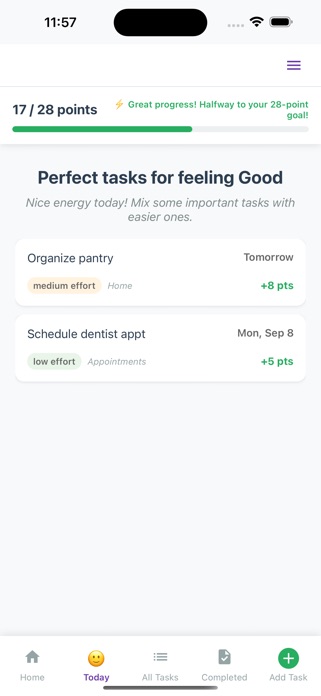

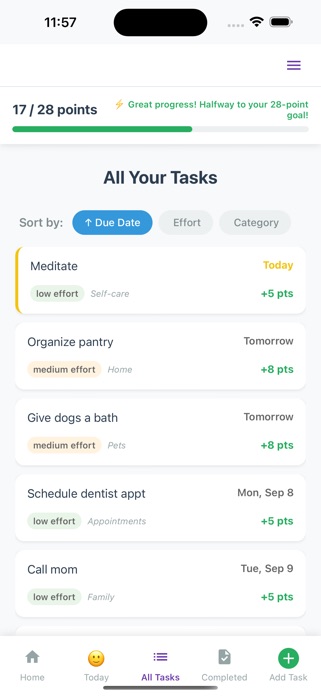
Chameel is a solo-developed task manager built around one clear premise: your to-do list should adapt to how you feel. A morning mood check-in reshapes both task suggestions and daily point targets, offering a more forgiving structure than a static checklist. At version 1.0.1 with zero ratings and a tidy 28 MB footprint, the app is unmistakably early-stage but conceptually coherent and surprisingly lean for a first release.
Mood logging recalibrates tasks sensibly
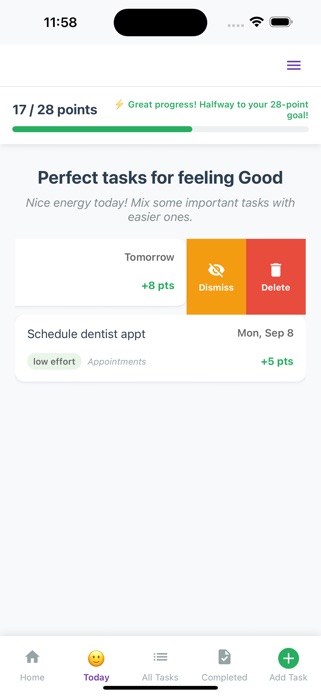
The core loop is straightforward: log your mood each morning, and Chameel recalibrates your point goal for the day while surfacing tasks it judges appropriate for your current energy level. Urgent items still rise to the top regardless of mood, which is a sensible safeguard against the system becoming an excuse to defer real deadlines. A swipe-to-dismiss gesture lets you override individual suggestions quickly, without digging through menus or triggering a full reschedule. The concept is coherent and well-scoped for a 1.0 release. What remains unproven is whether the mood-matching logic stays useful over weeks of varied input, a question only sustained real-world use can answer.
Lean install size suggests stable performance
With no user ratings to draw on, performance impressions must rely on observable signals rather than community feedback. The 28 MB install size points to a focused build with minimal asset bloat, which typically correlates with snappy launch times and low memory overhead on modern iPhones. The app carries a 12-plus content rating and was built for iOS, so it should run cleanly on reasonably current hardware. What cannot be assessed yet is how the app handles large task libraries, whether sync or background processes introduce battery drain, or how gracefully it recovers from edge cases. Early adopters should treat version 1.0.1 as a beta in all but name.
Free entry point obscures future costs
The base download is free, which removes any barrier to trying the concept. The uncertainty lies in what comes next: the App Store listing flags in-app purchases as a possibility but provides no detail on what they unlock or what they cost. That opacity is a real concern for a productivity tool you are meant to build a daily habit around. Until pricing tiers are disclosed, it is impossible to judge long-term value against established free-tier competitors like Todoist or TickTick. For now, the zero upfront cost makes experimentation low-risk, but committing deeply before the monetization picture clarifies would be premature.
Mood data requires privacy review
Mood data is inherently personal, and a task manager that logs emotional states daily sits in a sensitive category from a privacy standpoint. The App Store privacy nutrition label for Chameel is the authoritative source on what data is collected, whether it is linked to your identity, and whether it is shared with third parties. We encourage prospective users to review that label before installing. As a solo-developer project with no published privacy policy visible at launch, the level of data infrastructure behind the app is unknown. Checking which permissions the app requests at first run, particularly around notifications and any health or analytics frameworks, is a worthwhile step.
Minimal design philosophy needs accessibility testing
The swipe-based interaction model and a morning check-in ritual suggest a deliberate, minimal design philosophy rather than a feature-dense interface. A compact 28 MB package typically means fewer custom assets and a cleaner layout, both of which tend to benefit readability. Formal accessibility support, including VoiceOver compatibility, dynamic type scaling, and sufficient color contrast for the mood-selection UI, cannot be confirmed from store data alone. Users who rely on assistive technologies should test the app firsthand before committing to it as a daily driver. The 12-plus content rating imposes no practical barrier for the adult audience this tool is aimed at.
Single developer shipped one early patch
Chameel launched and received its first patch, version 1.0.1, on the same date in October 2025, which suggests the developer was attentive enough to push a quick fix at release. Beyond that single data point, there is no update history to evaluate. Solo developer projects carry an inherent support risk: a single person maintains the entire codebase, handles bug reports, and ships new features without a team behind them. Lauren Byrne deserves credit for shipping a focused, conceptually distinct app, but prospective users should monitor the update cadence over the next few months before treating Chameel as an indispensable part of their productivity stack.
Pros
- Mood-based goal adjustment is a genuinely differentiated take on daily task prioritization
- Urgent tasks surface regardless of mood input, preventing the system from ignoring real deadlines
- Swipe-to-dismiss offers fast, low-friction control over suggestions without deep menu navigation
- A 28 MB footprint signals a focused, purposefully scoped build rather than a bloated first release
Cons
- Zero user ratings mean real-world reliability and mood-logic effectiveness are entirely unproven
- In-app purchase details are undisclosed, leaving the true long-term cost completely unclear
- No calendar integration, collaboration, or data export makes the feature set thin for power users
Related guides
Similar Tools apps


apptidal is independent and ad-supported. We earn no commission on installs and no company can pay for a better score. How we stay independent.